Cohort 4 Projects
The EarthLab Innovations Grant Program was launched in 2019 to fund actionable environmental research. The 2023-24 EarthLab Innovation Grants program received 23 high-quality proposals for research at the intersection of climate change and social justice. Proposals were evaluated by an 11-member review committee that included faculty and staff from several disciplines and community members from outside the UW. The following programs were each awarded up to $75,000 to generate equitable and actionable science and knowledge that make a positive impact on people and communities. The award period lasts 17 months and final products are due by September 25, 2024.
Centering Self-Determination as a Core Research Principle in a Multidisciplinary Partnership with the Akiak Native Community to Promote Climate Justice, Water Security and Indigenous Knowledge Systems
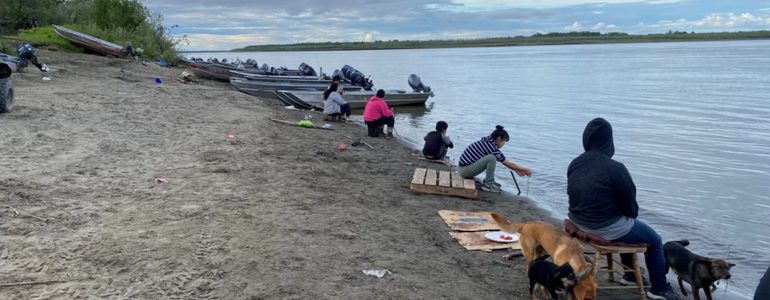
This project partnered with the Akiak Native Community in Alaska to advance water security through a tribally led, interdisciplinary approach. The team conducted extensive water sampling, generated new baseline data, and trained local leaders and youth in monitoring techniques. By integrating Indigenous knowledge with scientific methods, the project strengthened community self-determination, supported informed decision-making, and built momentum for long-term, locally managed water stewardship.

Supporting Tribal-Led Salmon Monitoring Using Computer Vision
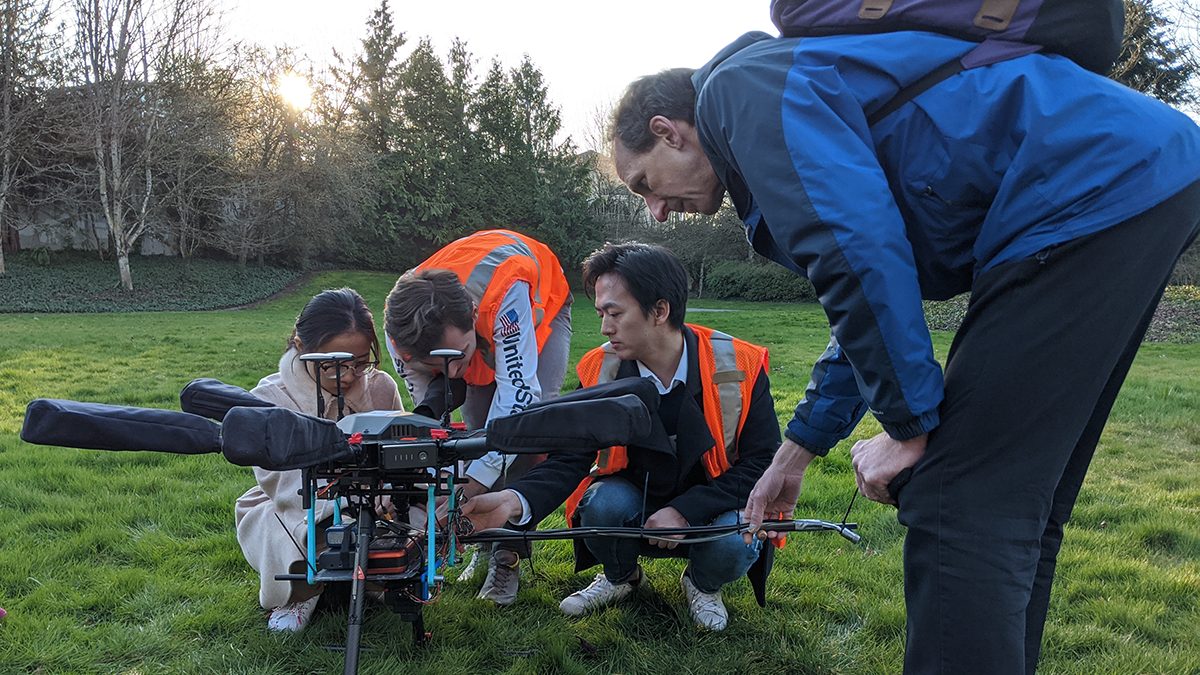
This project partnered with the Sauk-Suiattle Indian Tribe to develop a computer vision tool for counting salmon redds (nests) using drone imagery. By combining AI techniques with Tribal ecological expertise, the team created new datasets and models that reduce the time and effort required for monitoring. The work lays the foundation for scalable, community-informed tools to support salmon conservation and management.
Coastlines – Camera – Action: Community-Driven Research for Adapting to Willapa Bay’s Rapidly Changing North Shore
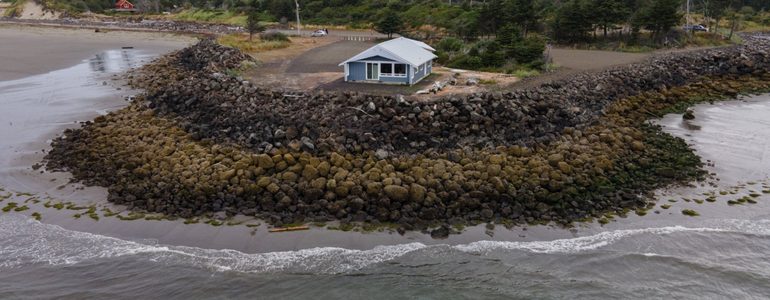
Following community-led restoration of 1.1 miles of shoreline by the Shoalwater Bay Indian Tribe, Willapa Erosion Control Action Now (WECAN), and Wash Away No More, UW researchers and North Cove community members received a 2023 EarthLab Innovation Grant to enhance coastal erosion monitoring systems, and amplify resident voices in coastal research. The grant upgraded photo monitoring stations, and community members have since submitted over 700 photos revealing storm-by-storm changes that would otherwise be undetectable through traditional seasonal monitoring methods. The project received additional two-year funding from Washington Sea Grant in winter 2025.
Cultivating Transdisciplinary Support for Equitable and Resilient Floodplains
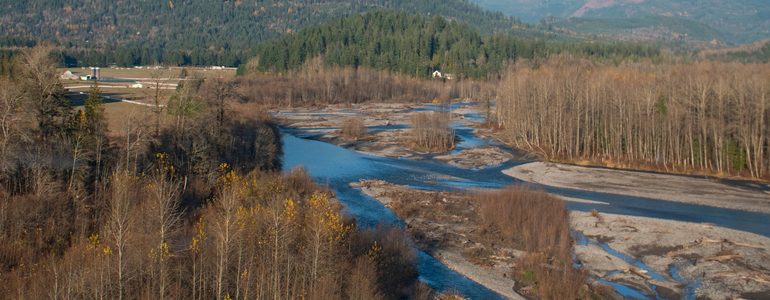
This project brought together UW researchers and Whatcom County practitioners to explore equitable and resilient floodplain management through seminars, workshops, and field experience. The team generated a set of collaborative research ideas and strengthened relationships across academic and community partners. The work highlighted both the value—and the challenges—of transdisciplinary collaboration in complex, politically sensitive environments, while supporting ongoing engagement through student-led work with the County.

A Collaborative Approach Preparing and Protecting At-Risk Communities from the Impacts of Climate Change in North-Central Washington
This project successfully established the Community and Climate Impact (CCI) Hub, bringing together community leaders, organizations, and public health experts in north-central Washington to address the health impacts of climate change. Through workshops and shared tools like a Best Practices Toolkit and online resource platform for sharing climate education materials in English and Spanish, the team supported more effective climate communication and community engagement. The work is continuing through a new regional climate taskforce focused on air quality and heat.
Increasing Environmental Connection, Literacy and Engagement through an Art + Science Collaborative Education Practice
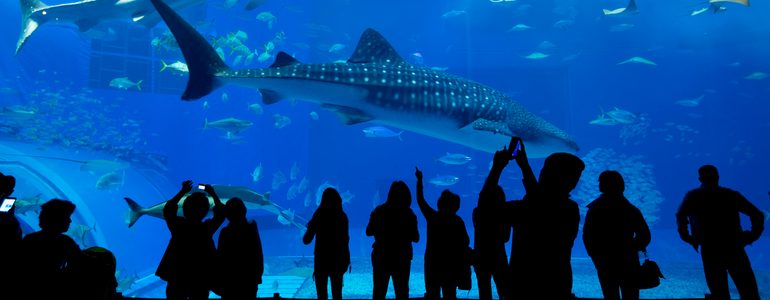
Intertidal Innovators brought together art and science to connect Seattle-area high school students with local marine ecosystems. Through a five-week internship, students explored nearshore environments and created The Golden Hour, a public, geo-located storytelling experience at Golden Gardens Park. The project increased environmental literacy, strengthened community connections, and produced an open-source curriculum and digital tools that can be used by educators and communities beyond the program.