Cohort 2 Projects

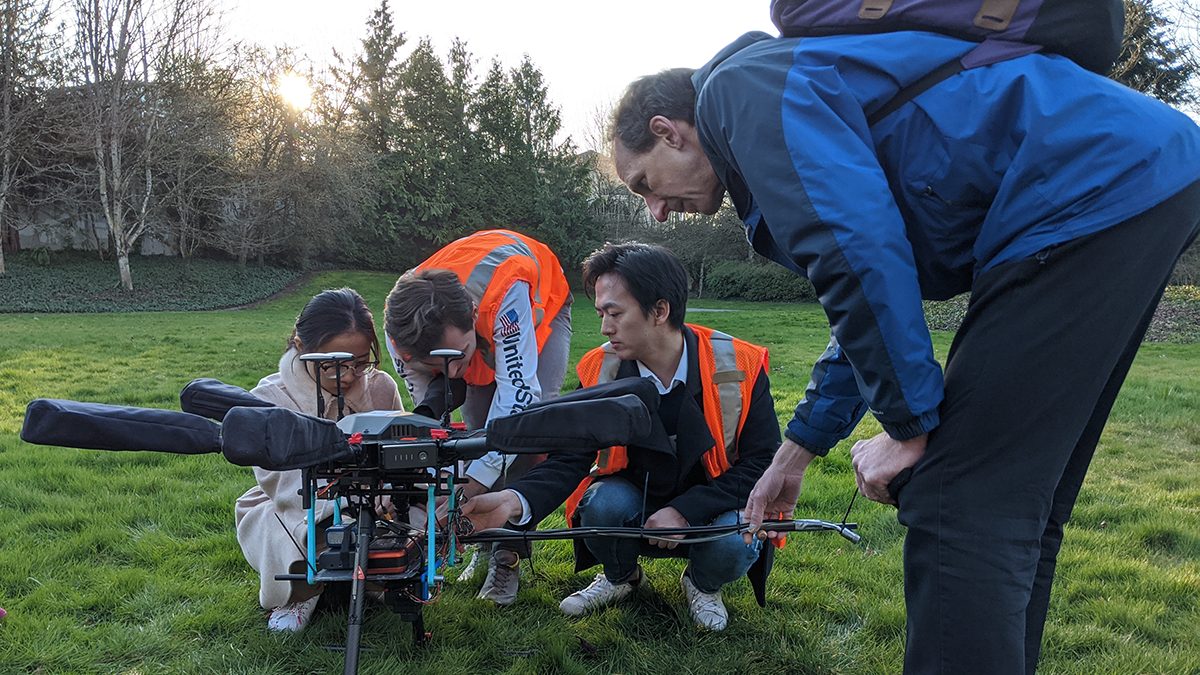
Does Vegetation Help Mitigate Roadway and Aircraft-Related Air Pollution in Seattle? A Community-Engaged Study Using Drones For 3D Air Quality Measurements
This project utilized drones instrumented with high-end air quality sensors to measure varying altitudes that differ in vegetation density and type and proximity to ultrafine particle sources. Findings from this study provided local partners with evidence on the effectiveness of urban planning initiatives that may utilize greenery as an approach to address particulate air pollution.
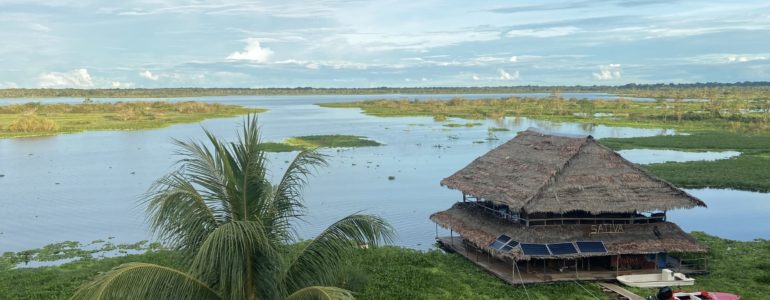
Lessons from Urban Indigenous Immigrants: Integrated Social & Ecological Dynamics of Informal Communities
This project brought together researchers and community members in three Indigenous immigrant communities in Iquitos, Peru to examine how traditional ecological knowledge supports community well-being, biodiversity, and climate resilience. Through surveys, drawings, and a pilot community science program involving 166 residents across 136 households, the team documented human–nature connections, urban biodiversity, and community health. The project culminated in a public art exhibit in Iquitos, Peru and Seattle, WA, amplifying community voices and sharing findings with policymakers, researchers, and the public.

Polar Science at a Human Scale: Knowledge Co-production for Hazard Planning, Food Sovereignty, and Climate Adaptation in the Alaskan Arctic
This project partnered UW researchers with the Iñupiaq community of Kivalina, Alaska, to co-produce climate adaptation strategies that support community safety, food sovereignty, and resilience in a rapidly changing Arctic. The project created new tools for sharing sea ice forecasts and observations, delivered polar science and culture education programs, piloted tracking technologies for local search-and-rescue volunteers, and developed a strategic planning framework to guide future community priorities. The work has continued beyond the grant through new research funding, student-led projects, publications, and ongoing partnerships that strengthen locally driven climate research and decision-making in the Arctic.

Píkyav on the Mid-Klamath River: Peeshkêesh Yáv Umúsaheesh ‘The River Will Look Good
This project partnered UW researchers with the Karuk Tribe to advance Indigenous-led restoration and river governance along the Klamath River. Through intergenerational River School field courses, youth internships, community workshops, and participatory mapping, the team documented ecological change, cultural knowledge, and community visions for restoration. The project produced a river justice framework and the multimedia Coyote’s Journey StoryMap, which shares Karuk-led approaches to floodplain reconnection and ecocultural revitalization. The work has since secured more than $850,000 in additional funding, supporting continued restoration planning, education initiatives, and climate adaptation research grounded in Indigenous knowledge and tribal sovereignty.