Now Hiring: Community Partnerships Lead
Are you a relationship builder looking to build a world where people and our planet thrive? Do you get excited thinking about a career that grounds equity and justice within environmental research and action? Apply today to be EarthLab’s first-ever Community Partnerships Lead!
Who we are:
EarthLab is an institute that is reimagining how academia can respond to the climate crisis. Our visionary approach connects the University of Washington’s world-class research capabilities with communities from around the globe to create novel, equitable and scalable climate change solutions. We’ve got big ideas for the future, which you can learn more about in our strategic plan. This will give you a solid understanding of our vision, mission and goals for the next several years. We think it’s worth perusing to help you better understand what we do.
Still with us? Great! Now here’s what we’re looking for:
The EarthLab Community Partnerships Lead is a new role that will build on initial efforts to support a critical aspect of EarthLab’s strategy: to activate, leverage, and sustain cross-boundary relationships.
In this role, you will proactively engage with a broad and diverse range of stakeholders, both across the broader community and with University of Washington faculty, students, and staff. You will work closely with EarthLab teams and partners to increase awareness of EarthLab’s activities and relevant issues, actively participate in forums and coalitions on behalf of the organization, mobilize community participation in EarthLab programming, organize UW participation in community programming and events, and facilitate the development of trusted relationships with partners at the UW and in the broader community. Additionally, you’ll be a resource for EarthLab member organizations to support their community engagement goals.
Now a little bit about you:
In order to thrive in this unique role, we’re hoping that you enjoy thinking about how to build bridges between people, ideas and systems that reside at the intersection of climate and social justice. We want you to champion community priorities and interests through the cultivation of authentic, trusting relationships with community stakeholders, EarthLab member organizations, and the broader UW, including faculty, researchers and students. Reporting to the Communication and Engagement Manager, you’ll work closely with our communications, programs & advancement leads to develop offerings that deepen and broaden our relationships.
Salary range:
$6,200-$6,800 per month
The culture you’ll be joining:
We acknowledge the systemic racism that exists in the environmental sector and within environmentalism at large. At EarthLab, we believe every member on our team enriches our diversity by exposing us to a broad range of ways to understand and engage with the world, identify challenges, and to discover, design and deliver solutions. If you are committed to helping us create an equitable, diverse and inclusive work environment where all voices are considered and valued, we want to hear from you.
Changing our Mindset to Meet the Moment: Expanding What Is Possible in 2023
Another new year brings new possibilities for climate action. While significant progress in policy and practices are taking shape around us, there is still a long way to go to diversify and scale solutions in order to meet the Sustainable Development Goals and other critical climate targets.
Rather than thinking in purely technical, policy, or financial solutions, I am thinking a lot about the need to change our collective mindset about how we meet the demands of the moment. Changing mindsets is multifaceted, but two aspects I am particularly curious about for the new year are: the need to rethink our openness to taking risks on new ideas and how we need to reimagine the diversity of talent of the workforce that is going to deliver on our ambitions for climate action.
Expanding what is possible
It is fantastic that more entrants from all sectors are beginning to grasp the enormity of the climate challenge, with talk of adopting new forms of energy, shifting systems of accountability and transparency, and bringing more voices to the table. And yet, rather than seeking to understand the potential in the new actors and new solutions, many are quick to shoot down ideas simply because they are unfamiliar, untested, or imperfect. An example of this backlash is the criticism for the calls for performance rankings of ESG funds, to better understand how our investment decisions are connected to a low-carbon economy. While there are good questions being asked about how we measure the data, let’s not reject the core idea that improved transparency on performance and the consequences of our endeavors is vitally important.
In 2023, let’s explore before we reject. Let’s open our minds and our hearts and invest in new collaborations that grow our shared understanding of what is possible. Let’s take more chances in unconventional ideas, because the conventional ones aren’t going to get us there alone.
Preparing the workforce that delivers on 2050 targets
As we endeavor to meet the plethora of goals that have been established between now and 2050, we need to also think about the workforce that is going to do it! Growing and diversifying our workforce is a key component to scaling climate change solutions, and this goes far beyond creating more “green jobs.”
Yes, we need to exponentially grow the number of people working to decarbonize transportation, energy, and buildings, but every sector and community will be affected by the impacts of climate change. The bigger story is that every one of us will need to learn how to mitigate and adapt our roles and organizations to collectively reduce greenhouse gasses and increase resilience. This is not an emerging sector, but instead a systemic transformation that will affect all jobs in all sectors, all over the world.
The question then becomes, who will be leading us through this transition and what skills, support and training do they need? We know that communities on the front lines of climate change that are hit first and worst are usually communities of color and lower income. What can we do to increase opportunities for and the benefits of taking action on climate for these communities? Key components of our success in meeting the challenge of this moment are growing workforce capacity to understand how climate is affecting our jobs and increasing the representation from communities most affected by climate change into said workforce.
Investing in the future
Over the past 5 years at EarthLab, I have learned that hopeful action can mitigate the paralyzing grief and anxiety that we can all feel in facing climate change. That is why I am proud that our organization cultivates future leaders, promotes and connects the vast research capacity of the University of Washington in service of a more sustainable planet, and invests in community-generated solutions at the intersection of climate and social justice. As we enter 2023, we are excited to play a role in shifting our collective mindset in how we understand and respond to the changing climate.
With an open mind,
Ben
Ben Packard
Harriet Bullitt Endowed Executive Director
EarthLab
Revisit our most popular stories of 2022
2022 was another great year of growth, reflection and connection for EarthLab. Explore our top stories below.
 5. Clean SHiFT team wins 2022 EPA Safer Partner Choice Partner of the Year
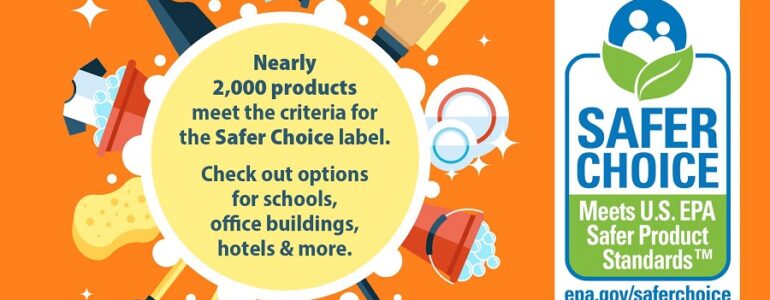
A multi-disciplinary team, funded by the EarthLab Innovation Grants program, has been working to help with the transition to safer chemicals for cleaning, disinfecting and sanitizing food trucks in Washington. In recognition of their efforts, the Clean Safety & Health in Food Trucks (Clean SHiFT) team received a 2022 Safer Choice Partner of the Year award from the U.S. Environmental Protection Agency (EPA).
 4. EarthLab welcomes four new advisory council members
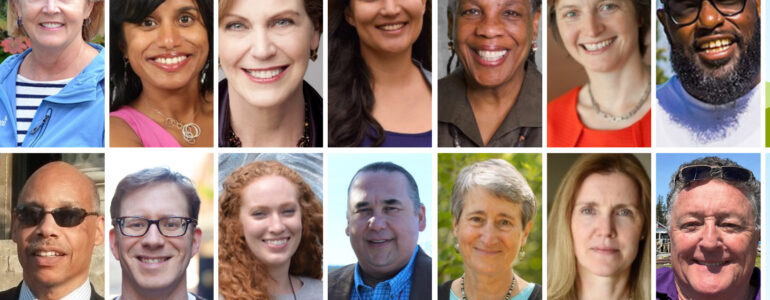
The Advisory Council is a body of volunteers from diverse professions and backgrounds that provides unique perspectives to help inform our programming, introduce new potential collaborators, and raise awareness and financial support for EarthLab. The Council works to connect decision makers outside of academia to UW resources. Welcome, Trish, Kate, Chukundi and Bob! We can’t wait to start collaborating together in this next chapter of advisory support.
 3. Indigenous Peoples’ Day 2022
The idea to replace Columbus Day with Indigenous Peoples’ Day was first proposed at the 1977 UN Conference by Indigenous advocates. Since then, more than a dozen states and hundreds of cities have adopted the day. This year, EarthLab shared several resources for folks wishing to learn more about the history, the resilience, and contributions of Native Americans spanning generations.
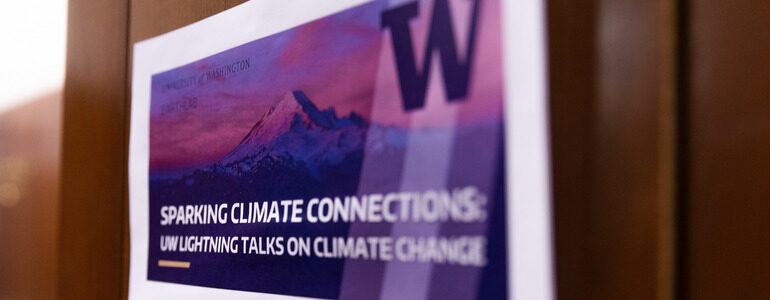
2. Sparking Climate Connections: UW Lightning Talks on Climate Chance recordings are now available!
In Fall Quarter of 2022, we invited faculty and researchers to submit a one-minute video recording – a lightning talk – summarizing their work. This call was amplified by the event’s 18 co-sponsors. We received a total of 105 lightning talks covering 16 different themes representing over 55 departments across the UW tri-campus. Learn more and watch the videos now!
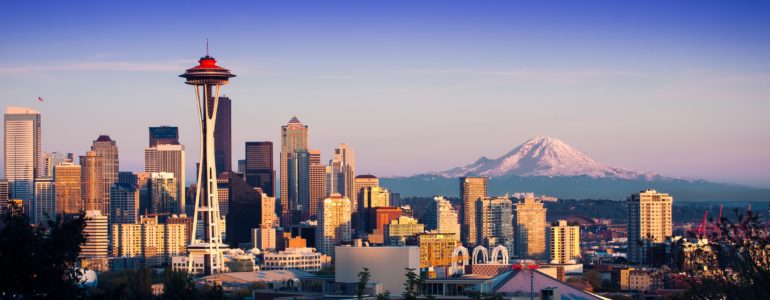
1. 2022 Innovation Grants announced!
UW EarthLab selected six community-led teams to solve complex challenges at the intersection of climate change & social justice that will make a positive impact on people’s lives and livelihoods.
Future Rivers 2023/2024 Cohort Applications are Open!
Applications are open for the fourth and final Future Rivers cohort for 2023/2024!
Future Rivers is a National Science Foundation Research Trainees hip at the University of Washington training the next generation of freshwater sustainability scientists. The program is designed to help graduate students gain an interdisciplinary understanding of global freshwater issues using an environmental justice lens.
The program is open to current and incoming graduate students across the University of Washington tri-campus. Up to 18 months of funding is available on a competitive basis.
Visit the Futures Rivers website to learn more about application requirements. The application deadline is January 27, 2023.
Clean SHiFT Team Wins 2022 EPA Safer Choice Partner of the Year
The products we use to clean our spaces impact not only those who use them, but also the environments into which they are discharged. A multi-disciplinary team has been working to help with the transition to safer chemicals for cleaning, disinfecting and sanitizing food trucks in Washington.
In recognition of their efforts, the Clean Safety & Health in Food Trucks (Clean SHiFT) team received a 2022 Safer Choice Partner of the Year award from the U.S. Environmental Protection Agency (EPA).

The Clean SHiFT team was one of 26 teams across 14 states to receive the recognition. The EPA Safer Choice program helps consumers, businesses, and facility purchasers find products that are safer for human health and the environment.
The Clean SHiFT team was a 2019-2020 EarthLab Innovation Grantee team that developed tools and educational materials to promote safer cleaning techniques and products in food trucks in Washington State. Many common cleaning products negatively impact the environment and human health. The resulting increases in exposures to chemicals are associated with acute and chronic health problems that disproportionately affect communities of color, women and children. With food trucks growing in popularity not only in our region, but nationally, there is a huge opportunity to help operators improve their health impacts.
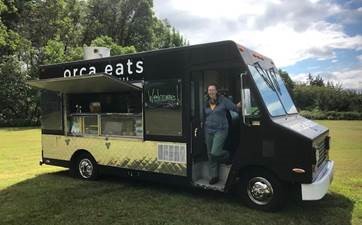
Through a collaboration between the University of Washington, the Washington State Food Truck Association, Heritage University, PopUPjustice, and the Washington State Department of Ecology, the Clean SHiFT team conducted a survey in English and Spanish of 49 food truck operators.
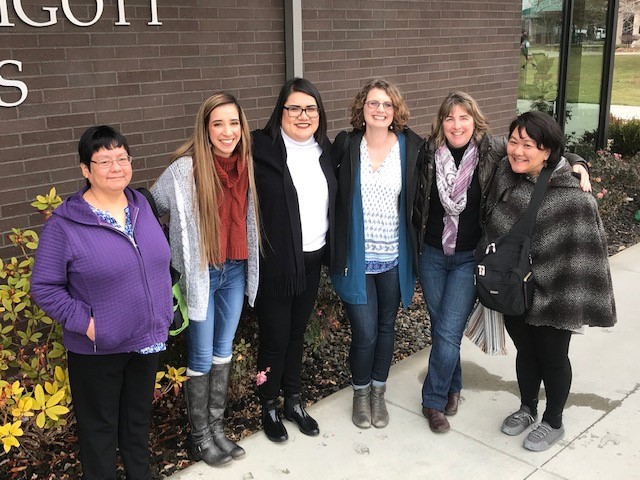
The team used the survey results to develop a bilingual online toolkit (English and Spanish) that includes six steps for safer cleaning to improve air quality and reduce respiratory hazards, a storytelling instructional video highlighting the selection of Safer Choice-certified products, and a fact sheet on cleaning and disinfecting. The toolkit also features a bumper sticker that can be shared with customers to access information on safer cleaning products, including Safer Choice-certified products.
“Clean SHiFT demonstrates how valuable EarthLab’s research to practice projects are for reaching small employers and their employees with innovative products that benefit both the environment and public health,” says Nancy Simcox, lead PI of the project.
Hear from Aurora Martin of popUPjustice on what this award means to the team: 2022 EPA Safer Choice Partner of the Year YouTube video.
The Clean SHiFT team includes staff from the University of Washington’s Department of Environmental and Occupational Health Science Continuing Education Program, UW Bothell’s School of Nursing and Health Studies, popUPjustice, the Washington State Department of Ecology, the Washington State Department of Health, King and Yakima County health districts, and students from Heritage University and the University of Washington.
This work was sponsored by an EarthLab Innovation Grant which supports projects at the intersection of climate change and social justice. To learn more about the Innovation Grants program, including how to apply for the current round of grants, click here.
EarthLab welcomes four new Advisory Council members
With the 2022-23 school year in full swing, EarthLab is excited to share that we have four new members who have joined the Advisory Council. The Advisory Council is a body of volunteers from diverse professions and backgrounds that provides unique perspectives to help inform our programming, introduce new potential collaborators, and raise awareness and financial support for EarthLab. The Council works to connect decision makers outside of academia to UW resources.
Welcome, Trish, Kate, Chukundi and Bob! We can’t wait to start collaborating together in this next chapter of advisory support. Learn more about our four new Advisory Council members below. To learn more about other present and past Advisory Council members, please visit our Advisory Council page.
Trish Millines Dziko
Technology Access Foundation
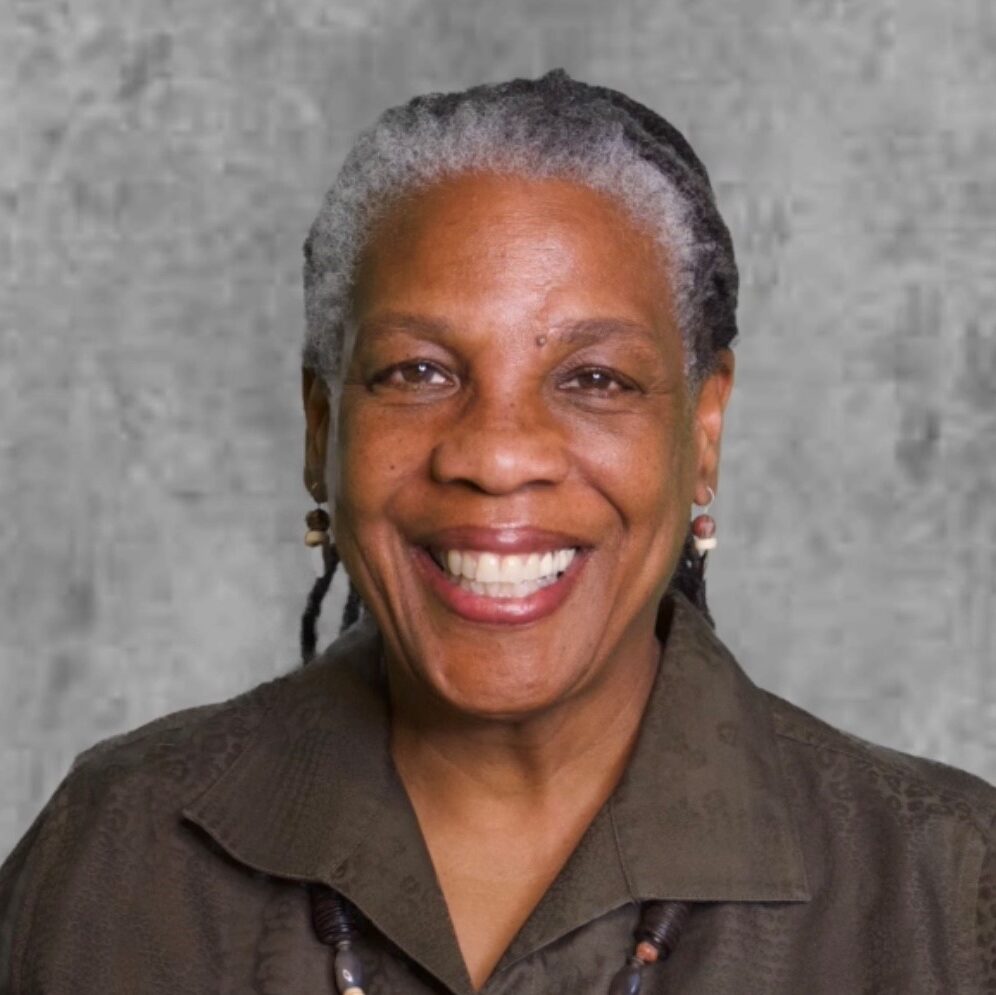 Trish Millines Dziko cofounded Technology Access Foundation (TAF) in 1996 after spending 17 years in the tech industry. Through Trish’s leadership, TAF transitioned from out of school programs to become a statewide leader in public education, operating TAF Academy (a 6th to 12th grade award-winning public school, co-managed with the Federal Way Public School District), partnering with public schools to transform them to promote the highest level of student learning, and increasing the number of teachers of color through the Martinez Fellowship.
Trish is a committed, proactive leader serving on boards of organizations that focus on children and education.
Kate Janeway, JD, MPA
Executive Coach
 Kate Janeway has been working on environmental issues for more than 50 years, starting with the oil spill that fouled 40 miles of beach in her hometown, Santa Barbara California, when she was 15 years old. Her work since that time has been defined by her quest for the most effective skill sets to address the existential challenges we face. Consequently, Kate has a law degree, a Master’s in Public Administration focused on Environmental Policy and Natural Resource Management and is a certified Executive Coach. The skills and insights from these combined disciplines inform her work with organizations and systems seeking change.
The through-line in Kate’s career has been the thirty years of work with The Nature Conservancy where she began as Assistant Director of the Washington/Alaska Field Office. Since then, she has served as a volunteer on TNC state boards in Ohio, Alaska and, currently, Washington.
Kate also serves on the Advisory Board of the Stanford Woods Institute for the Environment which is now deeply engaged in launching the new Doerr School of Sustainability at Stanford University.
Kate holds a B.A. in American Studies and Humanities from Stanford University, a J.D. from Georgetown Law Center, and an M.P.A. in Environmental Policy and Natural Resource Management from the University of Washington. She is a certified Hudson Institute Coach.
Chukundi Salisbury
City of Seattle
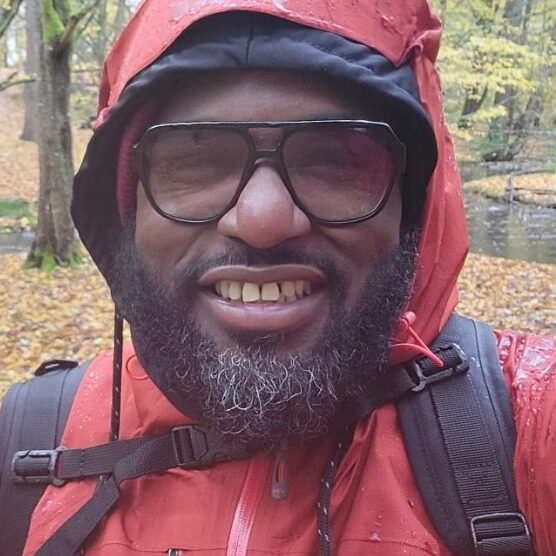 A self-described “Parks Kid”, Chukundi grew up in the Central Area and participated in several programs at Miller Community Center and other organizations. He has a lifelong commitment to service as a volunteer, board member, employee, manager, small business owner, and participant.
Salisbury is a 25-year employee of the City of Seattle, where he works as a Manager for Parks and Recreation and serves as the founding director of the Youth Green Corps. He has served as the Trails Coordinator, Urban Food Systems Manager, Director of Camp Long, as well as a Recreation Center Coordinator at Garfield Community Center.
Outside of work, he is the founder of Service is a Lifestyle, a 501©3 Non-Profit that has launched several community initiatives such as 100 Black Parents, URBVOTE (the Urban Vote Initiative), and the “This House is Not For Sale Campaign”. In 2021 he launched the “Health is the Real Bag” campaign to focus on wellness after losing over 70lbs and reversing his Type II Diabetes.
As a community volunteer he has served in many roles and boards, including Real Change Newspaper, YMCA Camping Services, Mothers For Police Accountability, Southeast Youth and Family Services, The African American Advisory to the Seattle Police Department, and the Central District Community Preservation & Development Authority (CDCPDA). He currently serves as the President of Phi Beta Sigma Fraternity, Epsilon Epsilon Sigma Chapter in Seattle.
As an entrepreneur, he is the founder of SEASPOT Media Group, which is a marketing and publishing house. He is the Publisher of the Adventures of Lil Big Fella Comic Book and has owned small businesses.
Salisbury is also a nationally known Disc Jockey who has performed locally and internationally at venues large and small.
Bob Whitener
The Whitener Group
 As owner and managing partner of The Whitener Group, Bob Whitener has over 40 years of experience working with tribal governments and enterprises within Indian County.
Bob has extensive experience in the areas of natural resources management, finance administration, human resources systems, tribal-state compact negotiations, policy development, and federal negotiations. Bob served as the Natural Resources Director for the Squaxin Island Tribe, The Director of Finance and Administration for the Northwest Indian Fisheries Commission, Executive Director of the Squaxin Island Tribe and CEO of Island Enterprises Incorporated. IEI is the economic development corporation for the Squaxin Island Tribe. Bob also served for many years on the Pacific Salmon Treaty, rotating in and out of the Chair of the Southern Panel.
After retiring from tribal service, Bob and his brother Ron, later joined by his Daughter Jennifer Whitener Ulrich, formed The Whitener Group LLC. TWG is dedicated to working in Indian Country and over the past ten years has worked with around 100 different tribes and Native Villages. TWG also works with many, usually non-profits, who want to work with or have good relations with tribes. These include the Pew Charitable Trust, The Nature Conservancy, Mountains to the Sound Greenway, Seattle YMCA, and Forterra.
TWG also works on emerging issues from climate change to carbon removal for these NGOs and/or as a supportive contributor to on-going processes.
EarthLab would like to thank Troy Alstead, Eric Artz, Jamie Bechtel & Chris Stolte for their years of service as inaugural Advisory Council members. We are grateful for the time, leadership and guidance that they provided within the council, and we look forward to continuing to work with them in other capacities as they transition into alumni roles going forward.
Three UW researchers to present & attend 2022 UN Ocean Conference on assessing global ocean equity
Next week, UW will be sending researchers to the 2022 United Nations Ocean Conference, which will take place in Lisbon, Portugal, from June 27-July 1. This five-day conference will seek to advance momentum around science-based innovative solutions related to global ocean action within the UN Sustainable Development Goal #14: “to conserve and sustainably use the oceans, seas and marine resources for sustainable development.”
In partnership with the UW Office of Global Affairs, three researchers from The Nippon Foundation Ocean Nexus Center and the Washington Ocean Acidification Center – two EarthLab member organizations within the UW College of the Environment – will be presenting their research in real time (both virtually and in-person) at the conference.
Virtual webinar on ocean equity from Ocean Nexus Center
On Monday, The Ocean Nexus Center’s Director Dr. Yoshitaka Ota and team will gather virtually and present at the UN Ocean Conference to introduce new frameworks for developing and conducting such ocean equity studies.
The free event begins at 10 a.m. Pacific Time. Click here to register.
Ocean Nexus is a transdisciplinary international network of over 30 research institutes and 100 ocean researchers focused on bringing social equity to ocean governance. This network is built on a 10-year partnership between the Nippon Foundation and the University of Washington.
“We are committed to building relationships at the global scale to deepen our understanding of social equity in the context of ocean management and collectively address systemic injustices, such as racial and gender discrimination and post-colonial hegemony,” said Dr. Ota, who is also a Professor of Practice at the UW School of Marine & Environmental Affairs. “Traditionally, ocean issues are treated separately from social issues, but our team believes that sustainable ocean development must include evolving evidence measurements and innovative performance indicators for a procedural and just transformation of oceans.”
The Ocean Nexus-led side event will introduce a new framework to showcase the development and transmission of Procedural Key Performance Indicators (PKPI), that guide sustainable development efforts in oceans to contribute to reducing social inequity and inequality. Eight Nexus fellows and postdoc researchers within the Ocean Nexus network will present their work on feminist epistemology, ocean’s climate justice, social impacts of marine conservation, racial history of US fisheries and ocean plastic policy in Italy.
The event will open by explaining the co-development processes behind the PKPI creation, how researchers are adapting the framework to specific ocean equity contexts, and will conclude by inviting collaborating researchers, government officials and decision-makers into a moderated Q&A. This session is free and open to the public. UW post doc researchers Jessica Vandenberg, School of Marine and Environmental Affairs, and Rebeca de Buen Kalman, Evans School of Public Policy & Governance, will be presenting their work as a part of this Ocean Nexus side event. Grant Blume, associate teaching professor at the Evans School, will also be attending the conference on behalf of the UW.
Watch the recording here.
In-Person event on access to data moderated by Washington Ocean Acidification Center
On Thursday afternoon, Dr. Jan Newton (WOAC Co-Director, Senior Principal Oceanographer at UW Applied Physics Laboratory and UW affiliate Professor of oceanography) will moderate an in-person panel discussion in Lisbon entitled “Ocean Acidification: Co-designing data connections to underserved communities for equitable outcomes.”
The Washington Ocean Acidification Center was established in 2013 following the recommendation of the Washington state Blue Ribbon Panel on Ocean Acidification. Based within EarthLab at the University of Washington, WOAC serves the entire state as a regional research hub that monitors, studies and trains the next generation of scientists, managers and decision-makers to face the challenges posed by ocean acidification.
This in-person UN side event will highlight how global programs – such as the Global Ocean Acidification Observing Network’s UN programme Ocean Acidification Research for Sustainability (OARS) and the Nippon Foundation’s Ocean Nexus Center at UW – can give visibility to local voices, especially those of Indigenous, Small Island Developing States and other underserved communities that depend on ocean-based economies for their survival.
“We need to consider the importance of local ocean acidification efforts conducted within effective global coordination, to take action at both of these scales,” said Dr. Newton. “It is critical to conduct local scale observations co-designed with communities, assuring that connections are made for their local data usage. At the same time, the value of doing so within a global context should be recognized– both for how these data can inform global assessments, like the UN Sustainable Development Goal 14.3, and for how global programs can give visibility to local voices. That is where we can make a real difference.”
Through a moderated panel discussion, presenters from Indigenous and Small Island Developing States backgrounds will explore how local partnerships between researchers and Indigenous communities can be supported within global coordination programs to build more resilient communities in the face of climate change as it relates to ocean acidification.
By informing global scientific assessments through local-scale research that is co-designed by both ocean scientists and communities, these collaborative adaptation strategies can better provide future scientific tools and programming to build more resilient communities worldwide.
The event, scheduled for 1:30-3 p.m. local time, was recorded and can be viewed here. To learn more about Dr. Newton and the Ocean Acidification Research for Sustainability programme within the UN Ocean Decade, click here.