EarthLab Releases Second Annual Impact Report, Highlighting Community-Led Climate Solutions and Resilience
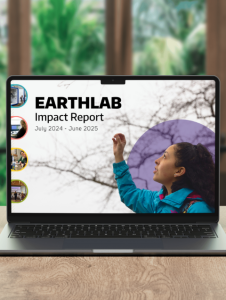
Mock up of the cover of the FY 2025 Impact Report on a computer screen with greenery in the background.SEATTLE, WA – November 13, 2025

The University of Washington’s EarthLab released its second annual impact report today, documenting fiscal year 2025 achievements in community-centered environmental research and action. The report highlights how trust-based partnerships are driving climate solutions across Washington state.

“This past year has reminded me that everything we do begins with trust,” said Phil Levin, Interim Executive Director of EarthLab. “Trust is what makes progress possible — not just in science, but in community, and in one another. In a time when so many are questioning institutions and struggling to believe that collective progress is still possible, I’ve seen how powerful it can be when people choose to trust — to stay in conversation, to share power, and to build solutions together.”

Read the full impact report here (PDF)

Key Highlights from Fiscal Year 2025 (July 1, 2024-June 30, 2025):

Training and Mentoring Tomorrow’s Climate Leaders

EarthLab’s Summer Internship Program continues to see strong demand among UW undergraduate applicants, with a roughly 5% acceptance rate reflecting significant student interest in hands-on climate justice work. In partnership with the Program on the Environment, EarthLab co-sponsored an environmental justice seminar that consistently fills the classroom with students.

EarthLab also expanded NextGen Narratives, a blog series written by and for UW students exploring what equitable climate action and hope can look like. Students pitch story ideas, work with professional editors, and publish their perspectives to over 23,000 newsletter subscribers — building valuable portfolio pieces while amplifying diverse voices on climate futures.

Read our NextGen Narratives series here

Investing in Research Co-Created with Community

After five years of the Innovation Grants Program — which has awarded nearly $2M to 29 teams — EarthLab conducted a comprehensive program evaluation to inform its future direction. 

In early 2026, EarthLab will launch two new funding opportunities designed to meet different needs and timescales, enabling the organization to support both deep relationship building and rapid responses to urgent environmental challenges.

This year’s Innovation Grants Program case study highlights the Coastlines – Camera – Action project in North Cove, Washington. Following community-led restoration of 1.1 miles of shoreline by the Shoalwater Bay Indian Tribe, Willapa Erosion Control Action Now (WECAN), and Wash Away No More, UW researchers and North Cove community members received a 2023 EarthLab Innovation Grant to enhance monitoring systems and amplify resident voices in coastal research. The grant upgraded photo monitoring stations, and community members have since submitted over 700 photos revealing storm-by-storm changes that would otherwise be undetectable through traditional seasonal monitoring methods. The project received additional two-year funding from Washington Sea Grant in winter 2025.

Read the Coastlines – Camera – Action StoryMap here

Expanding What Is Possible for Environmental Research & Action

Like mycelium sharing resources across a forest network, EarthLab’s shared services model connects over 130 researchers and staff across multiple research centers to the university resources they need to thrive.

This infrastructure has proven essential during one of the most challenging periods for climate research funding. When research teams lost federal awards with little warning in early 2025, EarthLab’s finance and administration team helped them rapidly pivot. Becca Hart, EarthLab’s Grants Manager, worked alongside researchers to identify new funding opportunities and submit proposals within weeks, allowing vital community partnerships to continue.

Last year, EarthLab’s finance and administration team supported member organizations in submitting 23 proposals, saving researchers an estimated one to two months of work annually. That’s valuable time back that researchers can instead spend in communities, conducting fieldwork, and advancing climate solutions.

“My role is to be the bridge, or the shield, or the filter — depending on the day — between researchers and the bureaucracy of the UW, state, and federal governments,” Hart said.

EarthLab also facilitated over 45 collaborative events this year, creating spaces for researchers, policymakers, and community partners to build the relationships and trust needed for meaningful climate action.

Read the Q&A with Becca Hart here

Creating Connections at UW and in Community

EarthLab met with more than 30 groups across the UW and worked with a consultant to better understand how its summer internship program could serve both student learning and community needs.

EarthLab and its member organizations brought together more than 4,000 academics, policymakers, students and community partners tackling challenges from ocean chemistry changes to wildfire response to climate change health impacts.

Following the devastating Los Angeles wildfires in January 2025, EarthLab helped the Center for Health and the Global Environment (CHanGE) organize a two-hour hybrid event connecting L.A. area experts with Washington state practitioners. The event brought together policymakers at local, county and state levels, UW students and faculty, and community members to share lessons learned for future collaboration.

“In the aftermath of a disaster, there’s not time to develop relationships, ideas and trust,” said Dr. Nicole Errett, center director of the UW Center for Disaster Resilient Communities. “Events like these are essential to creating a foundation that will allow us to collaborate to address scientific challenges when events like these occur in Washington.”

Read former EarthLab summer intern Cordy Plymale’s blog about the event here

Looking Ahead

“Federal support for the climate and environment is shrinking, but local and regional leadership is growing,” Levin noted. “Across the Northwest and beyond, people are transforming uncertainty into action — finding new paths toward connection, justice, and care. The most meaningful progress rarely happens in isolation; it comes when people work side by side, grounded in respect, humility, and trust.”

EarthLab is doubling down on its strategic plan, renewing focus on equity, partnership, and action. We have a big vision to grow our programs and impact over the next several years. If our work resonates with you, we need your support.

Make a Gift to EarthLab

A PDF of the full impact report is available here.

If you would like the plain text version of the FY 2025 Impact Report, click here.


About EarthLab

EarthLab at the University of Washington connects researchers, communities, and students to address pressing environmental challenges through collaborative, community-centered approaches. Through its shared services model, EarthLab supports a network of research centers, manages competitive grant programs, and trains the next generation of environmental leaders. EarthLab’s work is grounded in trust, equity, and the belief that transformative solutions emerge when diverse knowledge systems and communities work together.



EarthLab extends Strategic Plan through 2028

Cover of the 2025-2028 Strategic Plan
Cover of the 2025-2028 Strategic Plan. Click on the cover to read the PDF version.

EarthLab has released an updated and extended strategic plan to guide the next three years of our work. This document reflects a shared commitment aligning our diverse partners — from Tribes and nonprofits to students and faculty — around a common vision for climate action. In times of uncertainty, this roadmap helps us make decisions that honor both our mission and the communities we serve, ensuring that our efforts create lasting, equitable impact.

Our approach to climate action will continue to be organized around four action areas: creating connections at UW and in community, investing in research co-created with community, expanding what’s possible for environmental research and action, and training and mentoring tomorrow’s climate leaders. An additional priority — securing a stable funding model — remains crucial to ensuring EarthLab can deliver greater impact across all four of these action areas.

The strategic plan extension was developed collaboratively among EarthLab staff with input from our network of partners, including UW faculty, staff, researchers, and students; Tribal members and representatives; nonprofit organizations; public agencies; and community members. The plan builds on real successes: nearly $2 million in innovation grants awarded to 29 research teams, a competitive paid summer internship program that’s attracted over 950 applicants, and more than $35 million in federal grants managed while supporting member organizations across the College of the Environment and beyond.

Stay tuned for announcements in the coming months (make sure you subscribe to our newsletter) as we aim to deliver on this plan. Between re-launching an updated Grants Program that will invest in new ways to convene and respond to challenges, in addition to developing new opportunities for UW-community connections, there will be many opportunities to get involved.

With the support of our interim executive director bringing a fresh approach to the work, an experienced leadership team and core team dedicated to the cause, and passionate supporters like you making this work possible, we’re hopeful for the future of EarthLab, for a future where people and planet thrive.

Learn more and download the plan.


Learn Climate + Public Health Research Methods with the Reach Fellowship


A Conversation with Phil Levin: EarthLab’s New Interim Executive Director

Phil Levin
Phil Levin, EarthLab interim executive director.

Phil Levin has spent his career asking a deceptively simple question: How can science actually help the places and people who need it most? Since joining the University of Washington as a Professor of Practice in 2016, he’s worked to bridge what often feels like a large gap between research and real-world conservation challenges. 

In late June, we announced that Levin will serve as EarthLab’s interim executive director prior to a comprehensive national search being conducted for a permanent successor. Levin will take on this role in addition to serving as the director of the United by Nature initiative.

Across his career, Levin’s collaborative approach has earned recognition through awards including the Department of Commerce Silver Award and NOAA’s Bronze Medal for his work on marine ecosystems, and the Seattle Aquarium’s Conservation Research Award for his work in Puget Sound. His work has been featured in NPR, PBS, The New York Times, the BBC, MSBNC, and The Economist, among others. With over 200 published papers in peer-reviewed journals, book chapters and technical reports, Levin has demonstrated his ability to communicate complex environmental science in a way that showcases a perspective rooted in fairness, shaped by resilience and elevated by hope.

This month, we got a chance to sit down with Levin to learn more about his work and what he envisions for this next chapter at EarthLab.

EarthLab: What drew you to environmental justice work as a conservation scientist, and how do you see your scientific background (both within and outside of academia) informing your role as EarthLab’s interim executive director?

Phil Levin: I’ve always believed that conservation isn’t just about protecting nature—it’s about protecting people and the relationships we have with the world around us. Environmental justice brings that into sharper focus. My work has spanned coral reefs, fisheries scinece, and large-scale assessments like the National Nature Assessment and now United by Nature. Across all of it, the most enduring lesson has been this: science matters most when it serves those most impacted. As interim director, I see my role as making space—for ideas, for partnerships, for solutions that honor both rigor and relevance. My background gives me the tools to ask hard questions, but more importantly, to listen well and follow the answers to unexpected places.

For those who may be unfamiliar, can you share how you have supported or been involved in EarthLab’s work prior to this new role?

I’ve been involved with EarthLab since the beginning—serving on the Faculty Steering Committee and collaborating on interdisciplinary projects that span ecological science, policy, and community engagement. I’ve also worked closely with EarthLab’s leadership over the years to help shape its direction, bring in external partners, and support funding efforts. This isn’t a new chapter—it’s a continuation of a shared journey.

What does authentic partnership look like between scientific institutions and frontline communities, and how will you help foster that at EarthLab?

Authentic partnership starts with humility. It’s not about parachuting in with answers—it’s about building trust over time, acknowledging power dynamics, and letting communities define what success looks like. At EarthLab, we’re fortunate to have examples of this kind of work already underway. My job is to nurture those relationships, clear roadblocks, and make sure we’re resourcing our partnerships not just financially, but with attention, accountability, and respect.

What are you excited about working on in the next year at EarthLab?

Honestly—it’s the people. EarthLab is filled with brilliant, creative, deeply committed individuals. I’m excited to help elevate their work, strengthen our cross-campus and community connections, and sharpen our focus on equity-centered climate and environmental solutions.

What’s one environmental justice challenge that keeps you up at night, and what gives you hope about solving it?

What keeps me up is the deep inequity in who gets to shape environmental decisions—and who bears the cost when those decisions go wrong. But I find hope in the next generation of leaders: students, practitioners, and scientists who are refusing to accept that inequity as inevitable. They’re pushing all of us to do better.

How do you balance the urgency around climate action with the patience required for thoughtful, inclusive relationship building?

This is one of the most persistent tensions in my work—and honestly, one of the most important to navigate well. I’ve spent much of my career working on issues where the stakes are high and the timelines feel crushing. In every case, there’s a strong pull to move fast. But I’ve learned—sometimes the hard way—that rushing without trust usually leads to shallow solutions at best, and lasting harm at worst.

The most enduring and equitable outcomes I’ve seen have emerged from relationships, not reaction. That means making the time to listen, to build trust, and to co-create goals with the communities most affected. That kind of work doesn’t always look like “progress” on a Gantt chart. But it’s what lays the foundation for real, transformative change.

So I try to operate with urgency—but not haste. I aim to move fast when it comes to showing up, being accountable, and removing institutional barriers. But when it comes to building trust, sharing power, and shaping long-term solutions, I know we have to move at the speed of relationship. As Stephen Covey put it: change moves at the speed of trust.

At EarthLab, I see part of my role as protecting space for both of these tempos—urgency and patience—to coexist. Because we can’t afford to choose just one.

What emerging opportunities do you see in the environmental justice space that weren’t available to previous generations of leaders?

There’s a growing recognition that lived experience is a form of expertise—and that’s a big shift. We’re also seeing more funders, institutions, and policymakers willing to center justice rather than treat it as an add-on. That creates real space for innovation, particularly at the intersections of science, art, storytelling, and action.

Is there a story from your professional experience that best illustrates why bridging social and natural sciences matters for the work ahead of us?

Yes—one that changed how I think about science, place, and justice.

It comes from a study on wildfire vulnerability that illustrates how, when we consider people and nature together, we transform not just our science but our actions.  Research led by one of my SEFS graduate students, Ian Davies revelaed that communities with majority Black, Hispanic, or Native American populations face up to 50% greater vulnerability to wildfires than other communities—because of where they live, the resources they have, and the structural legacies they inherit.

That statistic isn’t just a number. It’s a call to do things differently.

When I first learned about that disparity, it forced me to rethink everything: not just how we model fire risk, but where we focus our attention; not just how we communicate warnings, but who writes them; not just the ecological indicators we produce, but the social indicators we partner to understand—air quality, evacuation access, historical underinvestment, health care barriers.

In practice, bridging social and natural sciences meant reshaping the work. It meant designing interventions that didn’t just improve ecological outcomes, but also ensured support for vulnerable communities. It meant recognizing that wildfire resilience isn’t just about trees and fire lines—but about equity, infrastructure, and trust.

That shift—from single-discipline thinking to truly integrated science—does more than improve outcomes. It builds legitimacy, relevance, and resilience into our solutions.

For me, it’s a lasting lesson in how science becomes more powerful when it’s rooted in people—and why institutions like EarthLab exist to bridge those worlds.

How should organizations like ours be showing up for the next generation of environmental justice leaders?

Start by listening. Not with the intent to guide, but to understand. Young leaders know what they need—we should be asking how we can support, not shape, their paths. We also need to move resources—not just ideas. That means paid roles, shared decision-making, and a commitment to removing structural barriers. It’s not about inviting people to our tables—it’s about building new ones together.

If you could have coffee with any leader, past or present, who would it be and what would you ask them?

I’d have coffee with Louis Pasteur.

He was a scientist who bridged curiosity and public impact—someone whose work reshaped medicine, food systems, and public health, all while pursuing fundamental questions about how the world works. His legacy lives on not just in germ theory and vaccines, but in what’s now called Pasteur’s Quadrant: science driven by both a desire to understand and a commitment to serve.

That’s where I see EarthLab today—squarely in Pasteur’s Quadrant. We’re doing work that’s rigorous and relevant, rooted in research but also in community, in justice, and in the messy realities of climate action. I’d ask Pasteur how he held that dual commitment—how he stayed focused on discovery while staying grounded in service. And I’d want to know how he sustained his integrity and imagination while navigating institutional resistance.

Also, if the coffee turned into wine—ideally something fermented with a nod to his early work—I wouldn’t complain.


EarthLab’s Phil Levin To Deliver Opening Plenary at Ecological Society of America

Phil Levin, interim executive director of EarthLab, will deliver the opening plenary presentation at the 2025 Ecological Society of America (ESA) meeting on Sunday, Aug. 10. Held this year in Baltimore, MD, the annual meeting brings together thousands of scientists to share knowledge and raise awareness about critical ecological issues.

The title of Phil’s plenary, Embracing Radical Amazement: Harnessing Wonder and Awe for Transformative Environmental Policy, pulls from his time serving at the White House Office of Science and Technology Policy, where he directed the first-ever U.S. National Nature Assessment — which has now become the United by Nature Assessment.


Why Now: Reflections on Joining EarthLab

Phil Levin
EarthLab Interim Executive Director Phil Levin. Phil officially stepped into this role on August 4, 2025.

When I first arrived at the University of Washington in 2016, I was drawn by the promise of possibility—the idea that science, when grounded in community and courage, could do more than describe the world. It could help change it. That same promise is what pulled me into EarthLab’s orbit as a member of the Faculty Steering Committee and a co-conspirator on activities from the Innovation Grants program, to transdisciplinary research to late-afternoon brainstorming sessions fueled by equal parts hope and coffee.

So why join EarthLab now as Interim Director, nearly a decade later?

Because I still believe in that promise. And because the world—messy, wondrous, and in no small part on fire—needs institutions like EarthLab more than ever.

EarthLab isn’t just a center or an initiative. It’s a gathering place for people who believe the future can be better—and who are stubborn enough to try to make it so. It sits at the intersection of research and reality, insisting that knowledge should not just be admired, but applied. That’s not an easy stance. It means grappling with complexity instead of simplifying it. It means building bridges when it would be easier to retreat to disciplinary silos. It means listening—really listening—to people outside the academy, and trusting that solutions to our most pressing environmental challenges won’t come from any one lab, dataset, or credential.

What excites me most about stepping into this leadership role is the chance to help steward and grow that spirit. To support scholars and practitioners who are not afraid to ask inconvenient questions. To make room for new voices, especially those that have long been left out of the conversation. And to work alongside a community I’ve been lucky to be part of for years—one that understands the power of collaboration, and the necessity of humility.

Of course, the challenges we face are enormous. Climate change, biodiversity loss, environmental injustice—none of these have quick fixes. But I’ve never believed our job is to be optimistic. Our job is to be honest, brave, and imaginative. To recognize, as Ada Limón writes, that “the world keeps opening before you,” even when it breaks your heart a little. Especially then.

I see EarthLab as a space where that kind of radical imagination is not only welcomed, but required. A place where science meets storytelling, and where the question isn’t just what’s the problem, but what’s possible.

I’m honored to step into this role. And I’m looking forward—truly—to doing the hard, hopeful work ahead with so many of you who believe that science, at its best, is a public good.


Ben Packard reflects on his leadership at EarthLab

Ben Packard
Ben Packard, inaugural Harriet Bullitt Endowed Executive Director of EarthLab, stepped down from his role on August 1, 2025.

The idea that inspired me to serve as the inaugural Harriet Bullitt Endowed Executive Director of EarthLab in 2017 is a powerful one: If we could connect the talented and curious researchers, students, staff, and faculty of the University of Washington in service of community-driven and actionable solutions, we can make our world safer and more resilient in the face of climate change.

Working with others to bring this idea to life has been one of the most challenging and fulfilling roles in my career. The experience has further illuminated for me the essential truth that we can only change systems when we are working across sectors, cultures and world views. None of us does this work alone and all of us are needed in order to develop lasting solutions to these systemic challenges.

As I pass the baton to interim Director Phil Levin on Aug. 1, I am filled with deep gratitude. Thank you to all who have supported the important work at EarthLab and for supporting me and the team as we turned this idea into reality. Eight dynamic and challenging years on, we have demonstrated how EarthLab can deliver impact, and we have a strong team in place to carry on.

It was an honor for me to serve in this role named after Harriet Bullitt, a pioneering champion of environmental work in this region. This isn’t an ending for EarthLab. Rather, it’s EarthLab stepping into its next chapter of impact.  I will be cheering for Phil and the team from my new role as supporter.

Warm Regards,

Ben Packard

Ben's Signature


Ben Packard Stepping Down as Inaugural EarthLab Executive Director

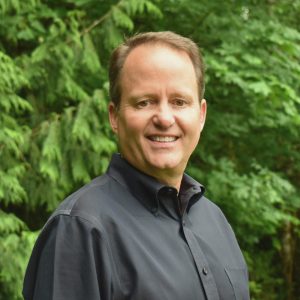
Ben Packard in front of trees
Ben Packard, Inaugural Harriet Bullitt Executive Director, EarthLab

After eight years of leadership, Ben Packard will step down from his role as EarthLab’s inaugural Harriet Bullitt Endowed Executive Director, effective August 1, 2025. Phil Levin, a professor of practice at the UW College of the Environment and the director of the United by Nature initiative, will serve as the interim executive director until a comprehensive national search is conducted for a permanent successor.

EarthLab’s established management team, María Anguiano, Anastasia Ramey, and Constance McBarron, will provide continuity and support during this transition alongside EarthLab’s three advisory bodies, ensuring that ongoing programs and partnerships continue their strong momentum.

“I’m grateful to Ben for his steadfast leadership over the past eight years, helping to build EarthLab from an idea to what it is today: a bridge between the UW and community, and between science and action,” said Sally Jewell, the former U.S. Secretary of the Interior and current chair of the EarthLab Advisory Council. “I have every confidence in Phil Levin, and the entire EarthLab team, to continue to deliver the high impact programs that address real-world environmental challenges for long-term, positive change.”

The idea of EarthLab was born in the founding documents of the College of the Environment by the UW Board of Regents, who envisioned an institute at UW that could turn UW environmental science into solutions and action. Since its formal launch in 2017, EarthLab has grown into a dynamic hub that connects UW faculty, staff, and students working on environmental and climate issues from different disciplines with each other and with external community partners, to build solutions together.

Working alongside dedicated staff, faculty, and community partners, Packard has helped guide EarthLab’s evolution from a collection of affiliated centers to an integrated network focused on environmental and climate research, training, and resilience. This collaborative effort has yielded significant milestones, including the Innovation Grants Program’s investment of nearly $2 million in 29 community-engaged environmental research projects and the establishment of a wildly popular paid Summer Internship Program that continues to attract hundreds of UW students passionate about work at the intersection of climate change and social justice.

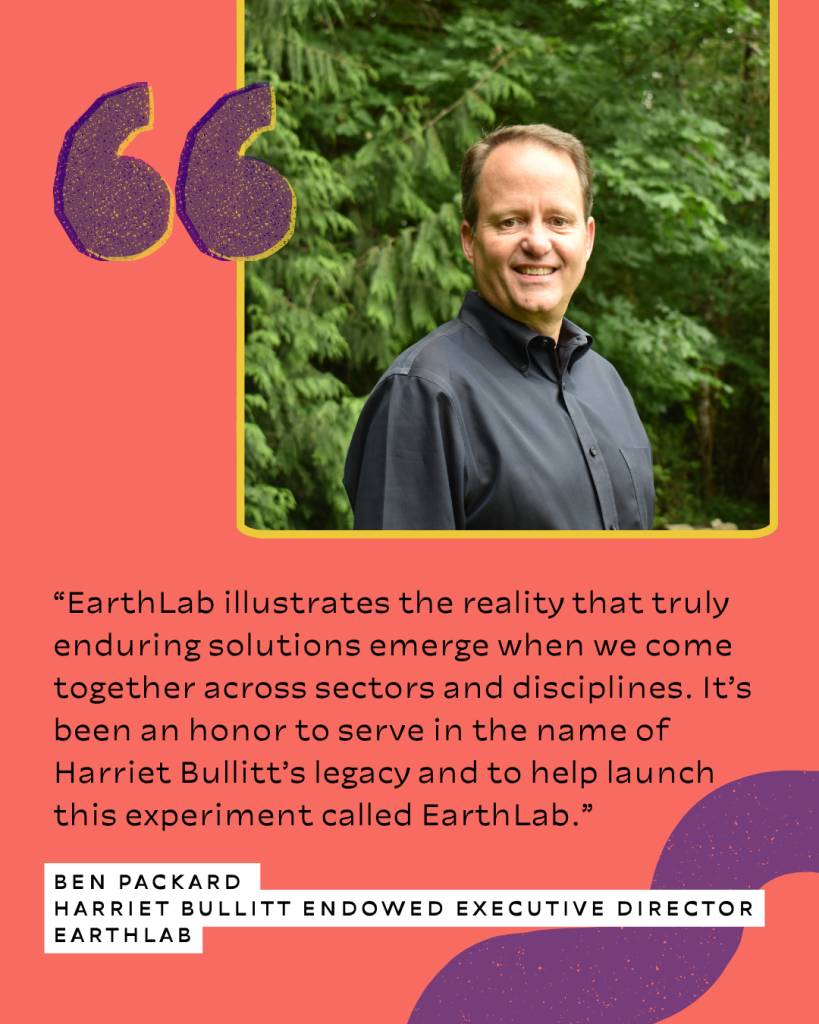
“The growth and impact we’ve achieved together reflects the incredible dedication of our entire EarthLab community—staff, faculty, students, and partners,” said Packard. “EarthLab illustrates the reality that truly enduring solutions emerge when we come together across sectors and disciplines. It’s been an honor to serve in the name of Harriet Bullitt’s legacy and to help launch this experiment called EarthLab. While I’m stepping down now, I remain a passionate supporter of the EarthLab mission and team who are absolutely committed to helping UW to take action on climate change, for the region and the world.”

“Ben has been an exemplary inaugural executive director, and firmly established EarthLab as a leading organization focusing on just and equitable solutions to environmental issues broadly, and climate in particular,” shared Maya Tolstoy, Maggie Walker Dean of the College of the Environment. “His ability to take on and deftly support complex environmental topics with compassion and optimism are traits I deeply admire. He has positioned EarthLab well for its next leader to take the baton, and while we will miss him greatly, we look forward to engaging with him in new capacities as EarthLab begins its next chapter.”

Amidst this transition, EarthLab remains firmly committed to its mission of developing innovative, just, and equitable solutions to climate challenges. The organization’s four core action areas continue to guide its work connecting different disciplines and communities in pursuit of climate resilience.

I’ve admired EarthLab from the beginning, and have been continually inspired by the impact it has made over the past eight years under Ben’s leadership,” said Levin. “I’m honored to be selected to steward the organization during this transition, during a time when this work is needed more than ever.”

Stay tuned for more information about Phil Levin when he officially begins his role this summer. 

About EarthLab

EarthLab is a visionary institute at the University of Washington taking equitable action on climate change. At its core, EarthLab is a dynamic hub of programs, organizations, event spaces, and collaborative activities that are grounded within the UW College of the Environment. EarthLab develops programs that connect the incredible resources at the UW — including the passion and talent of UW students — as well as partners in community, public agencies, and industry to create new knowledge and take collective action. The institute also provides collaborative resources and capacity building services to six research centers (called Member Organizations) within UW, in addition to grantees, students and external community partners

Image of Ben Packard in front of a forest


Microsoft’s AI for Good Lab awards UW-TealWaters team for new wetland mapping technology

Microsoft’s AI for Good Lab awarded TealWaters one of 20 grants who will receive a combined $5 million in assistance over the next two years for “game-changing organizations and projects helping solve today’s challenges and paving the way for a better future.”

TealWaters is a multidisciplinary collaboration, co-led by UW scientists Monika Moskal and Meghan Halabisky, to transform Washington state’s water management capacity by providing tools that inform and guide wetlands planning, protection, and restoration. TealWaters plans to support AI model testing beyond the scope of its existing tools to increase communities’ resilience to climate change and environmental stressors. 

The School of Environmental and Forest Sciences and EarthLab connected with the team for a Q&A about this award.

Q: Can you tell us more about TealWaters? What are the goals of the project and how does artificial intelligence play a role?

A: TealWaters is a multidisciplinary team of UW and private sector researchers and community partners. Our mission is to map and model wetlands, their hydrologic connections, and their benefits to society so natural resource managers and communities can identify, govern, and restore wetlands and their essential functions. Our platform identifies where wetlands are, where they can be restored, and estimates their specific benefits (e.g. flood protection, water quality, food provisioning, biodiversity – to name a few). Our ultimate goal is to increase communities’ resilience to climate change and environmental stressors. 

The MS AI for Good grant will fund two critically needed datasets for Washington state: 1) an improved map of wetland inventory for Washington state at high resolution (1-5m) and 2) the first-ever statewide map of high carbon wetlands. It will support development of new models that provide insights on the hydrologic drivers of wetlands (e.g. groundwater, surface water) and their dynamics. In the process we will evaluate the capacity of advanced AI/ML wetland mapping and statistical carbon modeling approaches to improve upon TealWaters’ strong existing models. Any new approaches can be applied here in Washington and in other regions in the US and beyond to enhance wetland conservation, restoration, and climate mitigation efforts.

Q: How would accurately mapping wetlands support different communities in the region? 

A: Wetlands offer natural solutions to a lot of environmental problems. Accurate maps – of where wetlands are, where they used to be, and where they can be restored – therefore are essential for communities to manage wetlands for the things they care about most. Our team has strong partnerships across Washington State, including the WA Department of Ecology, WA Conservation Commission, Tulalip Tribes, The Nature Conservancy of Washington, King County, and national partners such as the US Fish and Wildlife Service. We also have an extensive stakeholder and user network, including tribal governments, federal and state agencies, conservation organizations, natural resource managers, researchers, private industry, landowners, and community groups. Through these partnerships, our products are deeply informed by the specific needs of diverse users across the state. 

Beyond identifying wetland locations, communities also need and want to know the specific functions and benefits different wetlands are providing, and their role within the larger hydrologic system. In particular, inland wetlands serve as critical carbon sinks, storing 10 times more carbon than coastal wetlands. However, in Washington, peatlands and forested wetlands remain unclassified with most completely missing from wetland inventories. Without accurate data, Washington risks losing some of our most effective natural carbon sinks, which are essential for meeting climate goals. These same wetlands virtually always provide a wide range of other, layered benefits such as improving water quality, reducing flooding, providing habitat and green space, cooling urban centers, and more – the focus of future work. Better wetland maps are also key to understanding the hydrologic drivers of wetlands and their connections to other waterbodies and water sources. This project will allow us to advance these tools as well.

Q: Your teammates have a wide range of expertise and you have worked with many different communities to develop this project. How does your interdisciplinary and community-engaged approach inspire the process and affect the outcome?

A: Our community-engaged, user-based, multidisciplinary process is the very heart of our work. Effective modeling of wetlands and their functions is a creative scientific process that requires convergence of the knowledge, perspectives, and analytical skills of many scientific disciplines. Guiding this development for real-world applications and to meet and respect community needs also requires collaboration across the sciences and humanities and the creative engagement and insight of our partners in their specific and diverse contexts. The combination allows our products to be informed, useful, and far more creative than they ever could be in the absence of each of these partnerships. 

Q: What’s next for TealWaters? How will this award support these goals?

A: From a technical standpoint, we are in the process of developing workflows (software) for mapping and modeling a wide range of wetland functions that eventually will extend beyond Washington state. This award will advance three specific models and datasets – wetland intrinsic potential, wetland carbon potential, and hydrologic drivers (surface water, groundwater) – for Washington state and support development of the relevant cloud-based data and computing architecture. In the process, we’ll test a new set of advanced models that will inform and guide product development now and in the future. 

From a mission standpoint, our work lands in helping natural resource managers and communities to identify, govern, and restore wetlands and their functions, and increasing communities’ resilience in the process. We aim for the tools developed through this award to be adopted by state and local agencies, with direct integration into Washington’s Climate Action Plan and wetland management strategies. We are partnering with the Washington Department of Ecology to ensure our data is transmitted to county-level planners and wetland staff. We will also collaborate with stakeholders to explore integration into carbon markets and state-level greenhouse gas monitoring. Across our partnerships and uses, the products developed through this award support our broader goals of helping communities effectively manage wetlands on the ground.

Q: In the project abstract your team writes, “Current maps of wetlands in the United States derive from an earlier generation of science and are limited, often inaccurate, and poorly linked to other kinds of spatial information.” How will AI, advances in wetland science, computing, remote sensing, and geospatial tools help your team better inform proactive conversations about water, water management, and wetlands policy?

A: AI is all about pattern recognition. Recent advances in AI, e.g. in modeling imagery and time series data, could make it possible to better recognize and understand patterns in wetland dynamics, like seasonal changes or long-term shifts in the dynamics of water on the landscape. Improved mapping and deeper understanding of the hydrologic drivers of wetlands will give a more complete, accurate view of wetlands as essential water resources and hydrologic connectors – i.e. as key components of how water moves and is stored across the landscape. The resources support community conversations and decision-making amidst the complex tradeoffs that exist everywhere between wetlands protection, restoration, and development, especially in the context of a shifting climate. These advances ultimately will help decision-makers and policymakers make more informed decisions about water and water management at the scales and in the contexts that are most relevant to them and their communities.

Q: How will emerging technologies like AI incentivize user participation and improve wetland models over time?

A: Wetlands are highly diverse in their structure and function, from small or ephemeral ponds to complex floodplains. Good tools need to adjust to local conditions and the priorities of different users who may care most about different functions that the wetlands are providing – e.g. carbon storage, flood control, wildlife habitat, water supply, and many more. Incentivizing different stakeholders to customize and inform AI mapping tools through their direct observations will hopefully lead to broadly useful models that use more domain-specific knowledge than would be possible otherwise.

Congrats to the TealWaters team!


WASCO, CIG & Partners Publish Pacific Northwest 2024 Water Year Impacts Assessment