EarthLab News
UW researchers among key contributors to new roadmap for future climate assessments
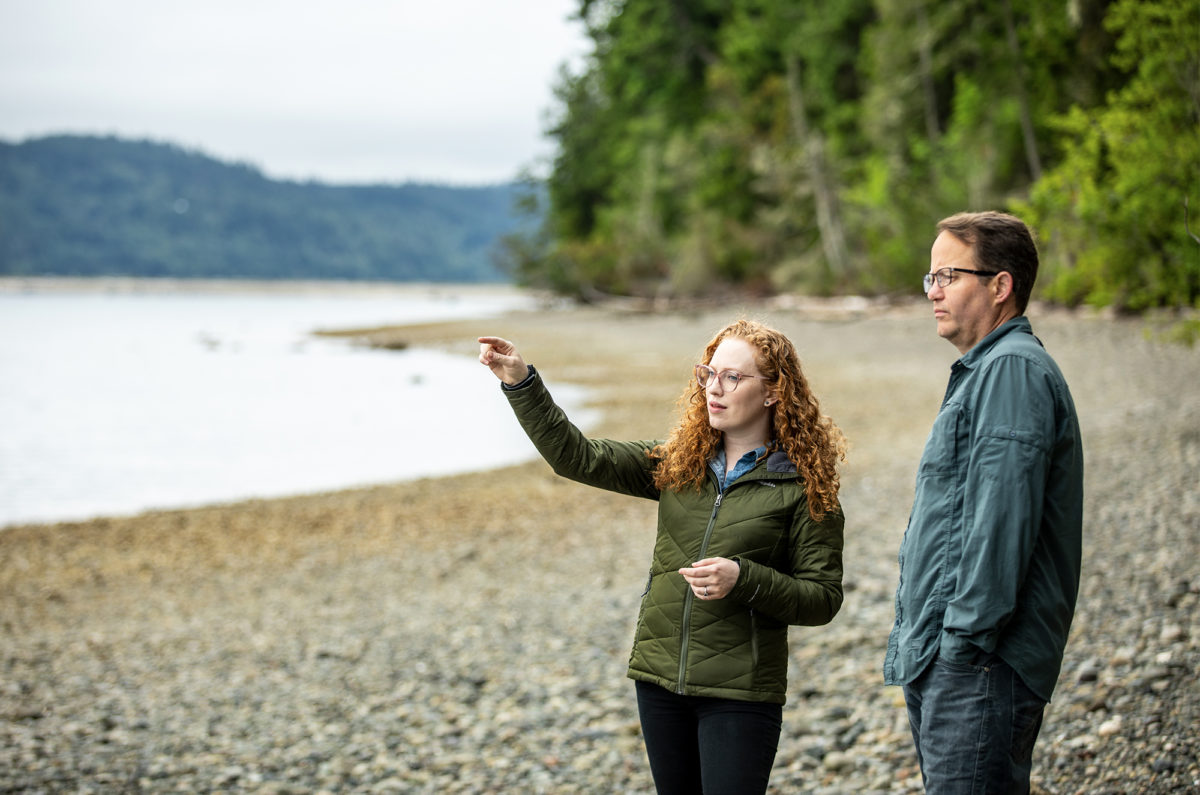
Climate Impacts Group’s Meade Krosby and Guillaume Mauger contributed to the Northwest section of the paper.
Read more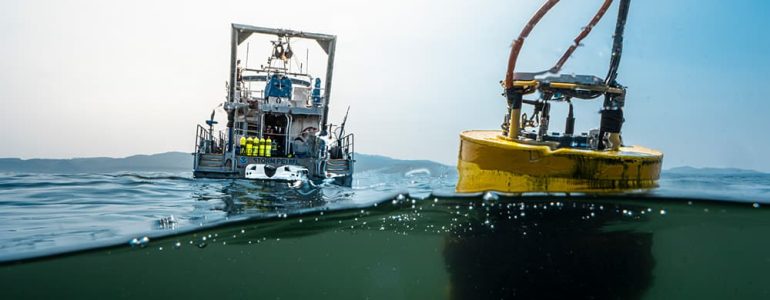
Real-Time Data on Olympic Coast Helps Fishers Make Critical Decisions
Two moorings in Olympic Coast National Marine Sanctuary now transmit near real-time data on low oxygen and shifting currents near the seafloor, giving fishers and tribal resource managers a clearer view of conditions they can't see from the surface. The work was funded in part by the Washington Ocean Acidification Center, a member of the EarthLab community, alongside NOAA's Climate Program Office, and grew out of a long collaboration with NANOOS, UW's Applied Physics Laboratory, and the Coastal Treaty Tribes. Read NOAA's full story on how the data is being used.
Read more
Letting lived experience lead the work: A Q&A on community, climate, and city government with Lylianna Allala
By Ruby Storey, Storytelling for Social Change Intern, EarthLab Summer 2026
In early August, I walked through the University of Washington campus toward EarthLab’s home in Condon Hall, as I had every week since the end of June. Unlike the times before, my usually clear view of the Seattle skyline was blurred by a wall of thick gray haze.
The Puget Sound’s skies had flooded with smoke from fires burning in Spokane, the North Cascades, and across the Canadian border in British Columbia.

The world is adapting to extreme heat — but not nearly fast enough
In a new piece by Grist, scientists say it will take more than early warning systems and cooling centers to keep people safe. Kristie Ebi, a lead author of the U.N. report and founding director of the Center for Health and the Global Environment (an EarthLab member organization) is quoted.
Read more
Reconnecting with Nature: A Summer Intern's Journey
By Anika Vinayak
Science Communication Intern, Summer 2026
There’s nothing quite like a Pacific Northwest summer — when the clouds finally part and the whole region remembers what sunshine feels like. This year was no exception. I spent it hiking Lake Serene and Snow Lake, swimming in Green Lake and Lake Union, and taking nature walks all over the city to soak in the sun.
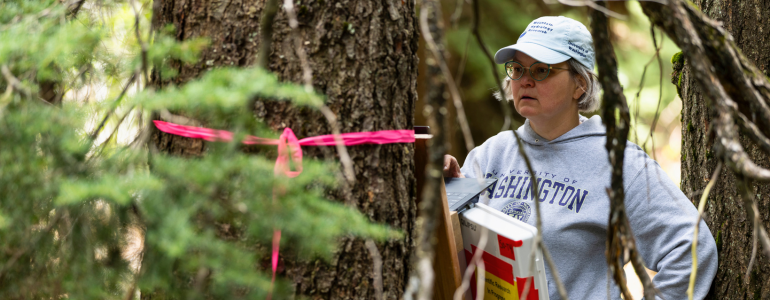
Summer leadership updates from EarthLab: Getting to know Susan Dickerson-Lange
As we prepare for a new academic year to begin next month, the EarthLab team is continuing at its usual busy pace, supporting our funded grant teams and mentoring our summer interns who are wrapping up their final projects this week. This summer also brings a change in EarthLab’s leadership.
Phil Levin has stepped down as interim executive director to begin a permanent appointment as the new director of the School of Marine and Environmental Affairs.
Finding My Piece of the Puzzle
By Meg Parent
Conservation Science Intern, Summer 2026
Puzzles have always made sense to me. Grouping the pieces first by edge and non-edge, and then by color or pattern, and then eventually fitting them all together to create one big picture. Each piece fits nicely in the palm of my hand, with just a few identifying colors or shapes, seemingly insignificant until it fits into place.
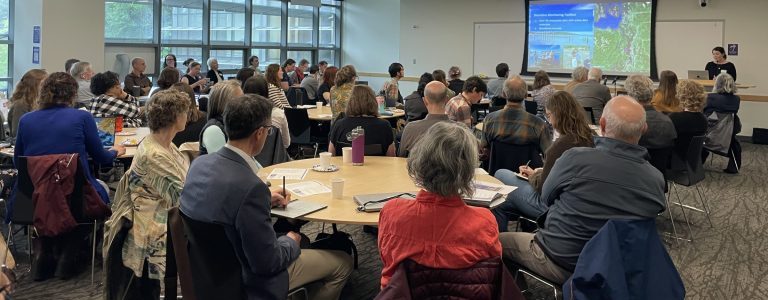
UW Environment celebrates partnership and impact at Community-Engaged Research Symposium
In late May, more than 120 colleagues from the University of Washington came together for an inaugural showcase and conversation about community-engaged research across the College of Environment. Community-engaged research is central to the University of Washington’s mission as a public university: Learning with and from communities is deeply embedded in our commitment to the people of Washington state and beyond.
Read more
EarthLab Grants Program Expands with New Incubator and Rapid Response Grants
From early childhood classrooms to prescribed fire surveys, UW-led teams will advance environmental work across the country.
May 19, 2026
Twelve University of Washington research teams will receive funding through EarthLab’s Grants Program, the organization announced today. The Incubator Grants and Rapid Response Grants — both launched in February 2026 — mark the first expansion of the program since 2019.
These two new programs grew out of insights from researchers and community partners over five cohorts of Innovation Grants: that their work often begins before traditional funding cycles can respond.
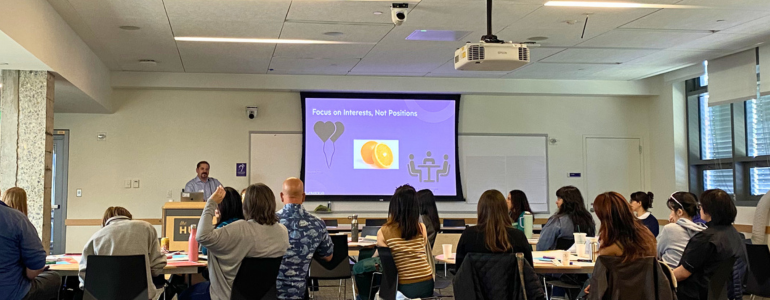
Learning to collaborate across differences through Intergenerational Dialogue event series
It turns out that, sometimes, the most effective way to have a real conversation isn’t in a meeting room, but on the side of the road by a broken down bus.
David Troutt, the Natural Resources Director of the Nisqually Indian Tribe and Chair of the Puget Sound Salmon Recovery Council, learned this from his mentor Billy Frank Jr. – a member of the Nisqually Indian Tribe and one of the most influential environmental advocates in Washington state history, known for his decades of work defending tribal fishing treaty rights.