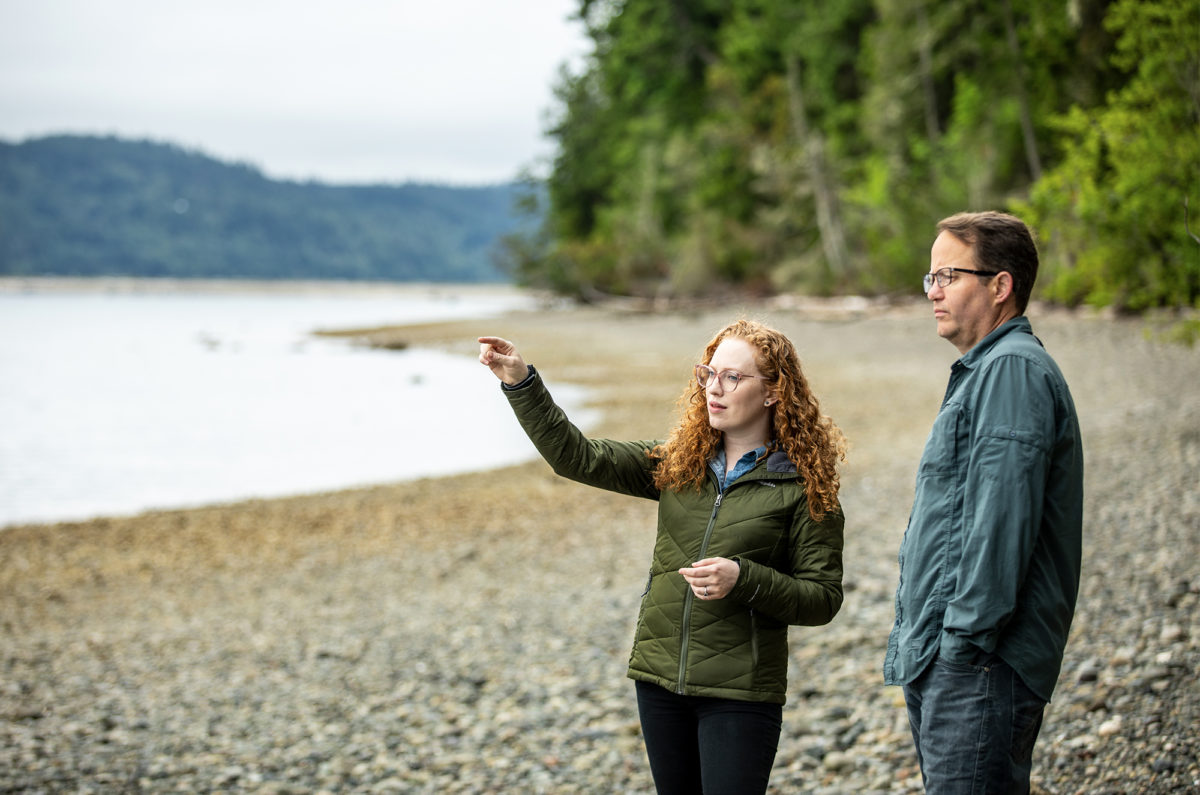
It turns out that, sometimes, the most effective way to have a real conversation isn’t in a meeting room, but on the side of the road by a broken down bus.
David Troutt, the Natural Resources Director of the Nisqually Indian Tribe and Chair of the Puget Sound Salmon Recovery Council, learned this from his mentor Billy Frank Jr. – a member of the Nisqually Indian Tribe and one of the most influential environmental advocates in Washington state history, known for his decades of work defending tribal fishing treaty rights.
In 1987, the Nisqually River Council became the only watershed council west of the Mississippi, bringing Tribal, state, local, and federal governments together with businesses, landowners, scientists, and community members around a shared vision of what a healthy watershed could be. With so many competing perspectives and priorities, finding a collective path forward wasn’t so simple. Billy decided the best way to get on the same page was to load the newly formed council onto a bus and take them out to see the watershed firsthand. On the way to the river, they got a flat tire. While they waited, a farmer asked Billy to go for a cup of coffee — and for the first time, two people on opposite sides of their taskforce talked about something other than their disagreements.
That story was one of many shared on April 24, as 25 seasoned and emerging leaders gathered on the UW Seattle campus for the first of four Intergenerational Dialogue workshops being held across the Puget Sound region over the next year. The series is part of a partnership between UW EarthLab and the Puget Sound Institute (PSI), whose Collaborative Leadership Program has documented fifty years of collaborative governance in Washington state.
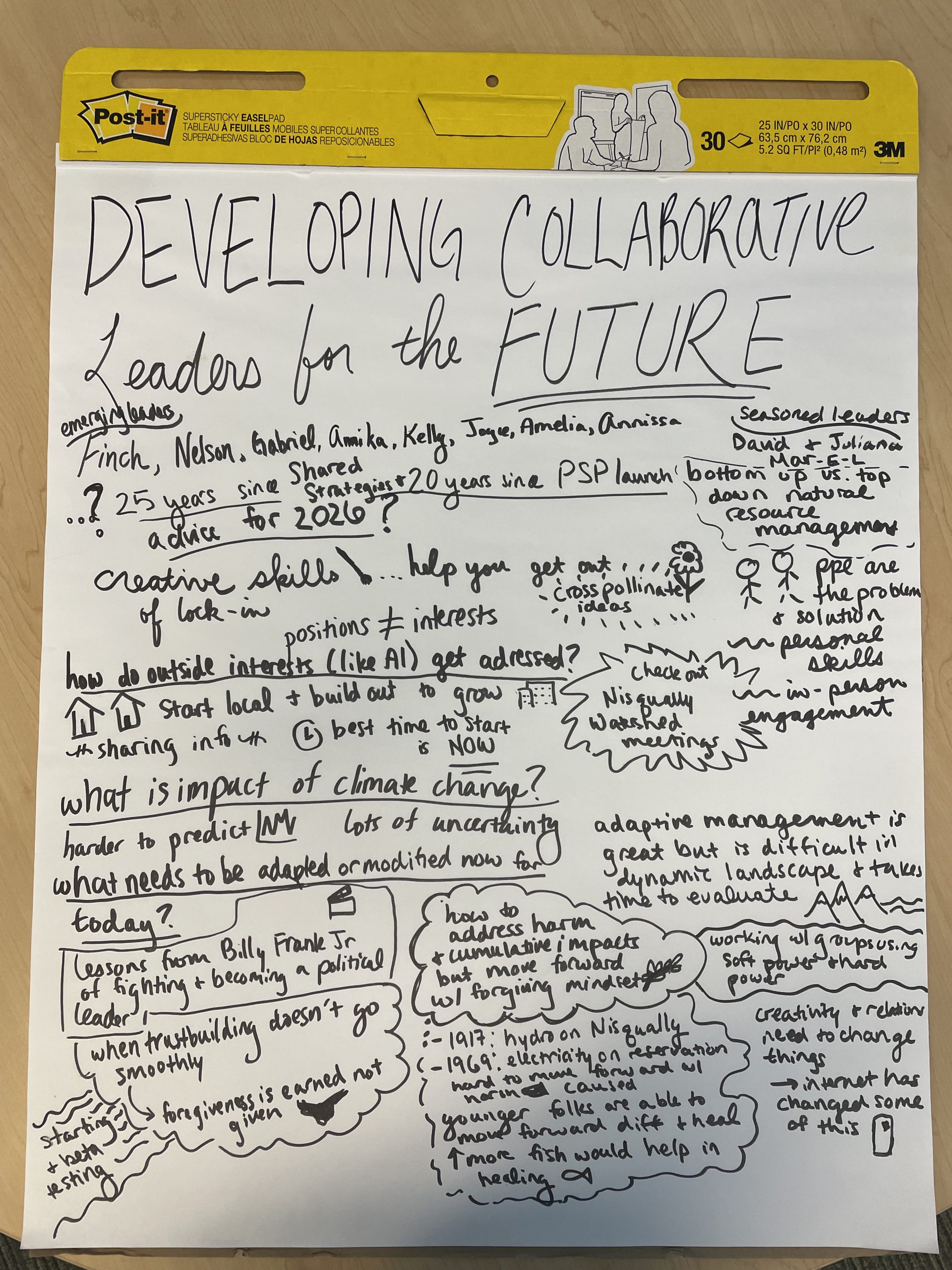
“Washington has a unique history as both the birthplace and a continued leader in using the tools of conflict resolution to reach consensus solutions to multiparty natural resource challenges,” said PSI Director of Special Projects Michael Kern. “As important as it was to capture that history through an archive of interviews and a documentary film, this new phase of work is even more important – building the next generation of collaborative leaders through teaching, training, mentoring, and intergenerational dialogue.”
Isa Saiz spent last summer as EarthLab’s Collaborative Leadership Intern at the Puget Sound Institute, working inside that archive and learning the history of collaborative governance in Washington by interviewing the people who built it. She joined the dialogue as a featured panelist, an Environmental Science major, and a member of the Ponca Tribe of Nebraska.
The workshop featured candid conversations between students and a panel of accomplished leaders who have collaborated on Puget Sound restoration. The panelists — Isa, David, Juliana Tadano of the Puget Sound Partnership, and Mary Ruckelshaus of Stanford’s Natural Capital Project — brought decades of experience in salmon recovery, tribal co-management, and environmental policy into conversation with students who are just beginning to find their footing in those same spaces.
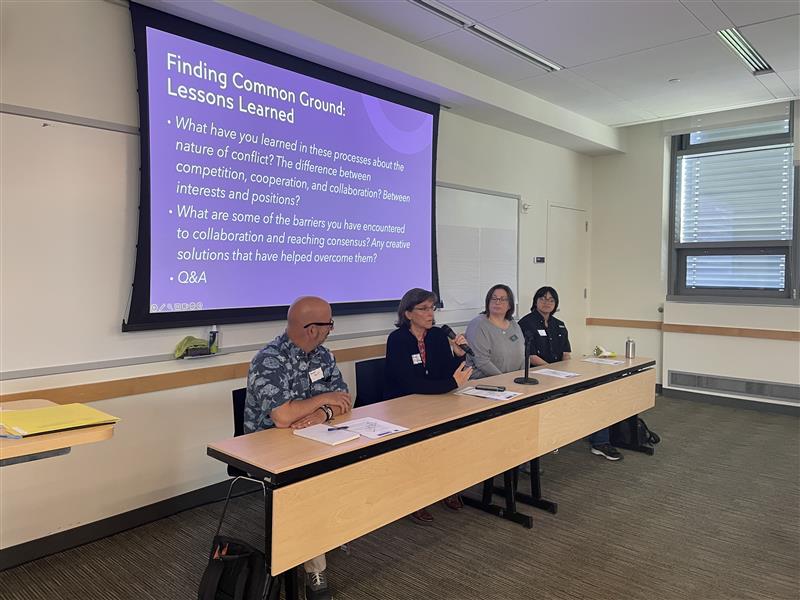
In conversation together, the panel talked about how progress can feel paradoxical: you often have to go slow to get far. Juliana shared that conflict is where change happens because it means people care enough to be bothered. Mary asked the room to start with the heart before getting into the how: find the shared vision first, she said, and the disagreements become navigable. Isa said she has learned that collaboration requires forgiveness, and that trust isn’t something that accumulates on its own — it’s something you have to consciously choose to give.
When a student asked how to balance the slowness of collaboration against the urgency of ecological crisis, David answered thoughtfully with another story: the Boldt Decision, which affirmed Tribal fishing treaty rights, was decided in 1974, but the work of defining what those rights could actually look like in practice took decades more to solidify.
Nearly thirty years ago, Nisqually Fall Chinook were considered a “threatened” species: pushed toward collapse by habitat loss, overfishing, and dams. But back at the Nisqually River today, after decades of restoration work, the wild Chinook have returned. Collaboration, David said, requires more patience than most people expect — but it should always be moving toward positive outcomes. Whether it’s restoring salmon runs, resolving land-use conflicts, or protecting ecosystems, environmental progress often depends on people who can bring a wide array of different interests together.
The Intergenerational Dialogue series continues in Fall 2026 at UW Tacoma and UW Bothell, and concludes in Winter 2027 at The Evergreen State College in Olympia. This series is funded wholly or in part by the United States Environmental Protection Agency (US EPA) under assistance agreement PC-01J22301 through the Washington Department of Fish and Wildlife (WDFW). The contents do not necessarily reflect the views and policies of US EPA or WDFW, nor does mention of trade names or commercial products constitute endorsement or recommendation for use.
Story by Allie Long