EarthLab News

Video: Talking about climate and weather with the Office of the Washington State Climatologist
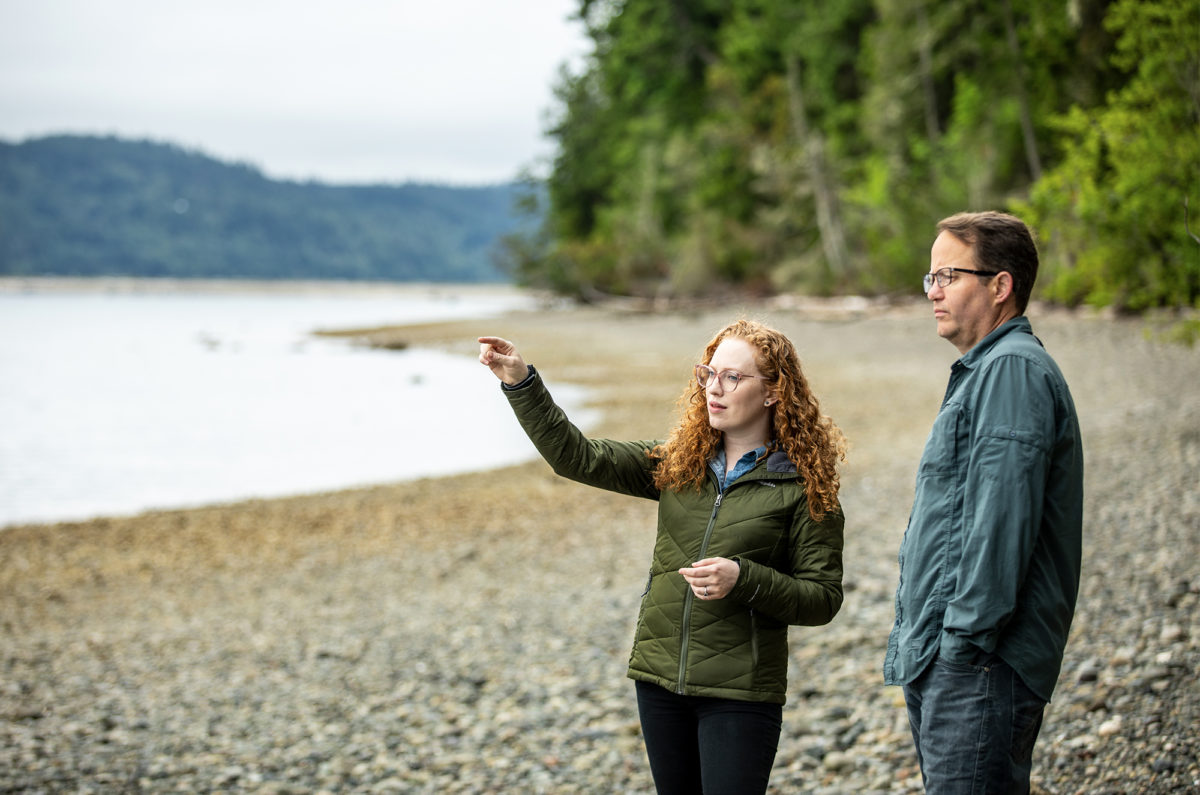
From their base at the southwest corner of the UW’s Seattle campus, Guillaume Mauger and Karin Bumbaco with the Washington State Climate Office (an EarthLab member organization) provide expertise, tools and resources on “all things climate” to partners and communities across the state.
Read more
Turning the tide: Spotlight feature on Chris Mantegna, UW Student and EarthLab Innovation Grantee
Chris Mantegna, part of the Innovation Grantee team "Increasing Environmental Connection, Literacy and Engagement through an Art + Science Collaborative Education Practice," is studying how pollutants affect shellfish in our food web — and training a new generation of marine scientists.
Read moreUW Climate Impacts Group contributes to new WA State Climate Resiliency Strategy
Members of the University of Washington Climate Impacts Group have supported a newly released plan for state agencies to address the regional impacts of climate change, such as dwindling snowpack, rising seas, flooding and dangerous heat events like the 2021 Pacific Northwest “heat dome.”
Read more
Parasites Are Everywhere. Why Do So Few Researchers Study Them?
A lack of parasite education leads many scientists to stumble into the field by accident. Chelsea Wood -- a former EarthLab Innovation Grantee and current Future Rivers Executive Committee Member -- who originally wanted to be a marine biologist, was no exception. When her college didn’t have any marine biology labs, Wood wound up working with parasitic worms at a nearby university. The experience changed her career trajectory entirely. “I realized that there was this whole sub-world, this whole alternate dimension that was present in nature and in all the animals that I had been interested in since I was little,” Wood says. “It was sort of like waking up from the Matrix.”
Read more
What one of Seattle’s hottest starts to July means for the rest of summer
After a rather cool June, July began with a ravenous desire to make up ground, kick-starting summer conditions across Western Washington with over a week of above-average temperatures, the hottest day since the hottest day ever in 2021 and record daytime and overnight highs. Karin Bumbaco, the deputy state climatologist at the University of Washington's Climate Impacts Group, is quoted.
Read moreHeat-Related Emergencies Are Soaring in the U.S. Can Hospitals Keep Up?
Dr. Jeremy Hess, Director of EarthLab Member Organization CHanGE, quoted in an article from The New York Times.
Read more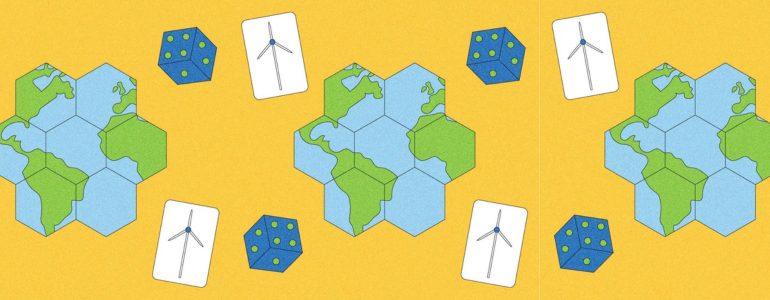
Can a new version of Catan, the cult-favorite board game, make climate change fun to talk about?
“It’s just more evidence that people have climate change at the top of their minds now,” said Dargan Frierson, an atmospheric sciences professor at the University of Washington, who leads Earth Games (for which EarthLab cosponsors the Climate Game Jam), a climate game design group on campus. Even though people are often hesitant to talk about climate change — according to a 2022 report, 67 percent of Americans “rarely” or “never” discuss it with friends and family — they really want to, he said. “There’s demand for ways to think about it, deal with it, in fun ways.”
Read more
Scientists want to know how the smells of nature benefit our health
Spending time in nature is good for us. Studies have shown that contact with nature can lift our well-being by affecting emotions, influencing thoughts, reducing stress and improving physical health. A new paper led by Dr. Gregory Bratman, director of EarthLab member organization Nature and Health, outlines ways to expand research into how odors and scents from natural settings impact our health and well-being.
Read more
UW hosts 7th annual Northwest Nature and Health Symposium
On May 1, approximately 100 people attended the seventh annual Northwest Nature and Health Symposium hosted by UW at the wǝɫǝbʔaltxʷ - Intellectual House from 9 a.m. to 5 p.m. Seven speakers from various institutions, in addition to a panel of the Greening Research in Tacoma Project, presented on topics centered around social and environmental justice.
Read more
NW CASC Researchers and Collaborators Publish New Study on Centering Socioecological Connections to Collaboratively Manage Post-Fire Vegetation Shifts
A new, NW CASC-supported study describes the types of information, coordination and values needed to manage post-fire vegetation shifts ethically and effectively as they become more common in the face of climate change.
Read more