EarthLab News
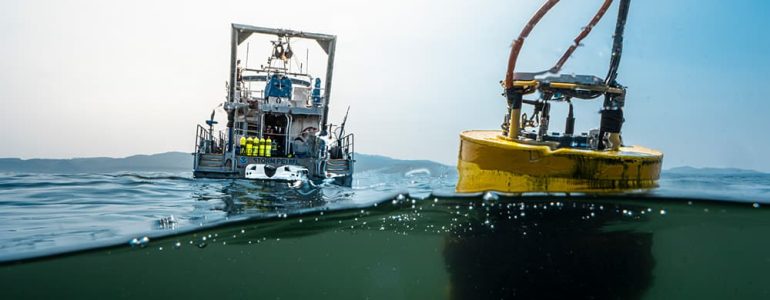
Real-Time Data on Olympic Coast Helps Fishers Make Critical Decisions
Two moorings in Olympic Coast National Marine Sanctuary now transmit near real-time data on low oxygen and shifting currents near the seafloor, giving fishers and tribal resource managers a clearer view of conditions they can’t see from the surface. The work was funded in part by the Washington Ocean Acidification Center, a member of the EarthLab community, alongside NOAA’s Climate Program Office, and grew out of a long collaboration with NANOOS, UW’s Applied Physics Laboratory, and the Coastal Treaty Tribes. Read NOAA’s full story on how the data is being used.
Read more
The world is adapting to extreme heat — but not nearly fast enough
In a new piece by Grist, scientists say it will take more than early warning systems and cooling centers to keep people safe. Kristie Ebi, a lead author of the U.N. report and founding director of the Center for Health and the Global Environment (an EarthLab member organization) is quoted.
Read more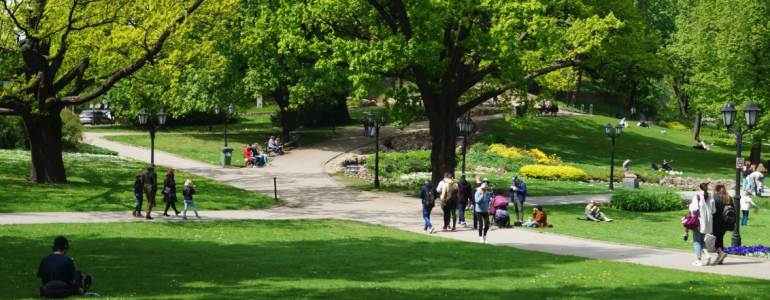
Why nature contact is good for us
Most people agree that time in nature is good for our mental and physical health. Whether it’s a remote wilderness backpacking trip or 15 minutes spent sitting on a park bench, people tend to feel better if they have some interactions with nature. Many scientific studies confirm this as well. Over the past two decades, and especially in the last few years, researchers have increasingly documented the positive effects of natural spaces on mental health and well-being. This includes outcomes like feeling less lonely, lower levels of burnout and depression and better abilities to cope during stressful situations.
Read more
Assessment of nature in the US now available for public comment
The Nature Record, a sweeping assessment of the state of nature in the U.S., was published in draft form for public comment and review in March. The report explores the impact of human development, including biodiversity loss, as well as the resilience of nature.
Read moreTech Moves: Smartsheet adds to C-suite; Gradial and Zeno Power name senior leadership
Featured in Geekwire, "Phil Levin is stepping in as interim director of the University of Washington’s EarthLab, an institute that spans multiple colleges and departments. Levin is a conservation scientist, professor in the UW’s College of the Environment, and lead scientist for The Nature Conservancy of Washington."
Read moreWildfire communication gaps persist for Spanish speakers in Washington. These groups are working to close them.
As wildfire seasons grow longer and more intense across Washington state, advocates are working to ensure that non-English speakers, many of them migrant or seasonal workers, are not left behind during climate emergencies.. Featuring Maria Blancas and the Community and Climate Impact Hub, a project funded by the EarthLab Innovation Grant Program
Read more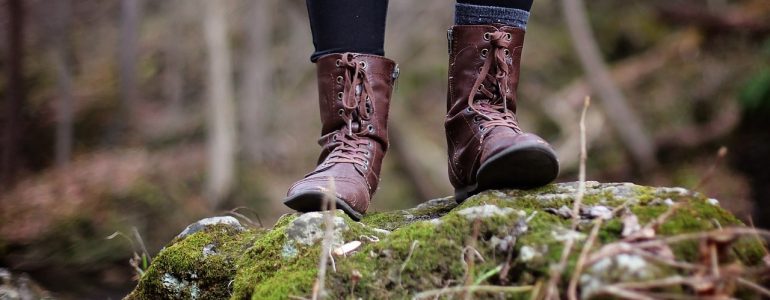
Q&A: UW researchers examine mental impact of Girl Scouts’ interactions with nature
New research from the University of Washington Center for Nature and Health, recently published in the Journal of Environmental Education, examined whether children’s interactions with nature that are embodied, rather than just visual, are associated with being in the moment and feeling connected to something beyond the self.
Read more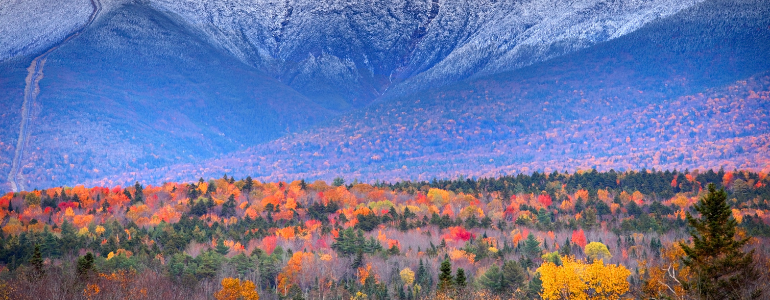
New research to measure WA’s climate resilience
Carlie Stowe, climate resilience specialist for the Climate Impacts Group at the University of Washington and the paper's lead author, said building resilience is critical in order to minimize effects from droughts, fires and other extreme weather events.
"As the government is investing in resilience, we want to make sure that we're spending that money wisely," Stowe urged. "And that the programs and activities we're investing in are resulting in increased resilience."
Read more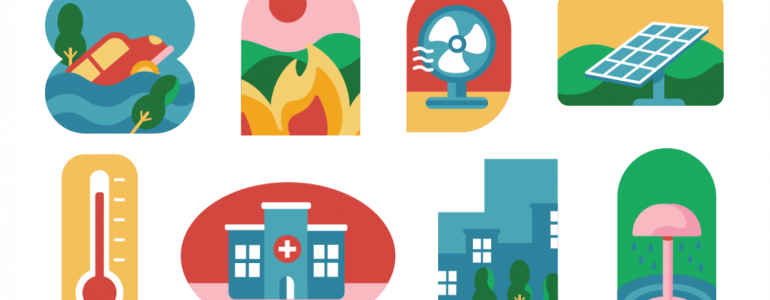
Protecting health in a changing climate
New grants for the Center for Health and the Global Environment, an EarthLab Member Organization, will form an exploratory research center and study how socioeconomic factors will influence climate change's health impacts over the next century.
Read more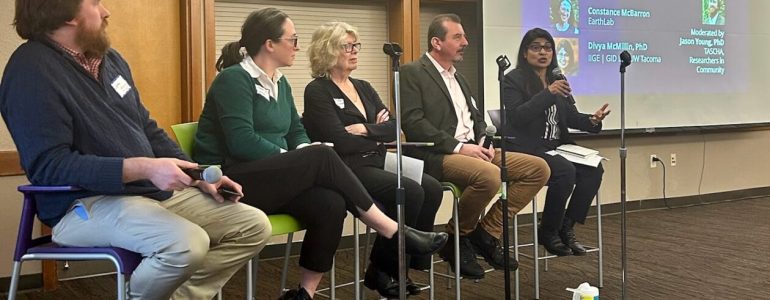
UW initiative ‘Society + Technology’ aims to foster broad collaboration at critical intersection
A new initiative at the University of Washington called Society + Technology, born out of a task force first assembled in 2021, is working to foster cross-campus collaboration and boost the UW’s public profile as it relates to technology’s social, societal, and justice aspects. The initiative, which held an inaugural convening last week, included EarthLab in a panel discussion about how we can build capacity to include diverse perspectives in conversations around technology and society.
Read more