EarthLab News
Introducing Backyard Buoys: Bringing Spotters to Indigenous Communities on the Front Lines of Climate Change
EarthLab is proud to share “Backyard Buoys,” a project managed by Washington Ocean Acidification Center co-director Jan Newton. Through EarthLab’s centralized service model, Newton was able to put through a major project proposal for the NFS Convergence Accelerator program, where she and her team received $5 million to collaborate with Sofar Ocean Technologies and coastal Indigenous partners on a community-led ocean observing project. Backyard Buoys uses simple and affordable instruments, called “Spotters,” to put access to and stewardship of ocean data in the hands of those most affected by climate change on the coast.
Read more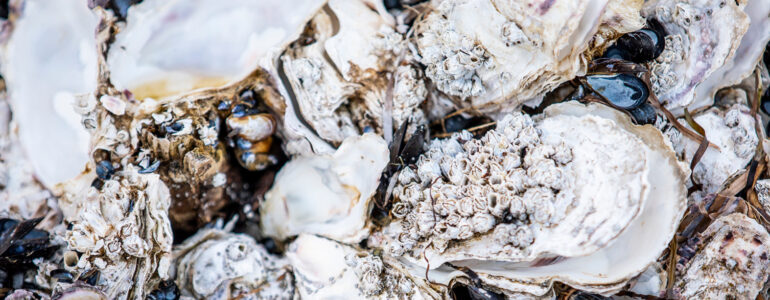
Fighting ocean acidification, one oyster at a time
Worldwide, the ocean plays an invaluable service to the planet by absorbing nearly 30% of the carbon dioxide produced by human activity. Yet this also drives a series of reactions that change seawater chemistry, and as a result the oceans are becoming more acidified, which poses a suite of problems to some marine organisms.
Read more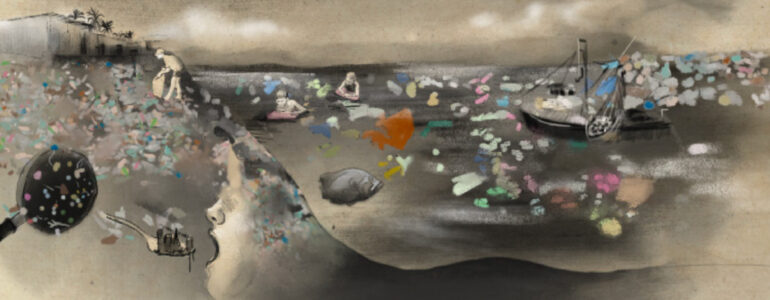
Ocean Nexus Report Launch: Equity & Marine Plastic Report 2022
An estimated eight million tons of plastics end up in the ocean each year, negatively impacting the environment and society. The burden of these impacts are often disproportionately experienced by more marginalized and vulnerable communities. Through thematic research and case studies that explore diverse issues of MPP, this report contributes to understanding the ways in which inequitable plastic pollution burdens are embedded within every facet of plastics, from its creation to disposal across all corners of the world.
Read more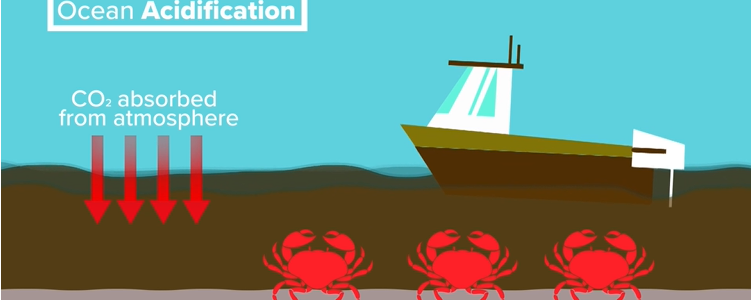
Salish Sea providing a 'window' into the future of ocean acidification
The Washington State Department of Fish and Wildlife (WDFW) is currently studying whether crabs could be impacted by ocean acidification, a process some scientists say Puget Sound is particularly susceptible to. Alex Gagnon, a researcher with the Washington Ocean Acidification Center, discusses the science behind greenhouse gasses, ocean acidification and the important crab industry in Washington state. (KING 5)
Read more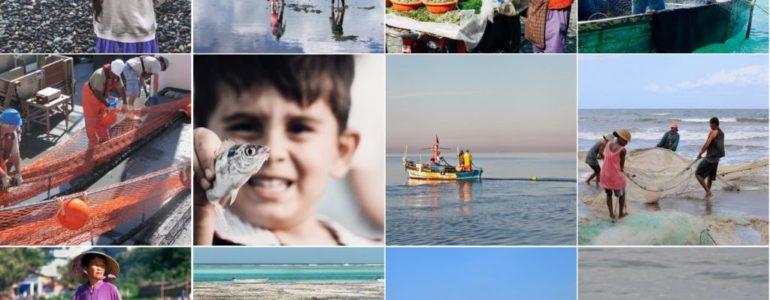
UN Ocean Decade endorses Nippon Foundation Ocean Nexus Center’s ‘Ocean Voices’ as an official ‘Decade of Action’ program
The Ocean Voices program asserts that the contribution of ocean science to sustainable development is determined by people, and therefore it is critical to understand the actors involved, their culture and wellbeing, and how power dynamics and decision-making processes influence our oceans.
Read more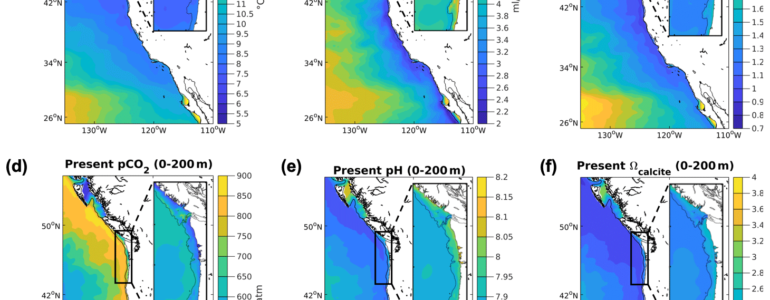
New model developed to predict impact of climate-driven changes to the California Current System
A multi-disciplinary team from the University of Washington (UW) and National Oceanic and Atmospheric Administration (NOAA) developed a new multi-model to project how processes that occur in the coastal ocean—such as upwelling, freshwater delivery, eutrophication, water column metabolism, and sediment interactions— alter the rate of change in the California Current System (CCS).
Read more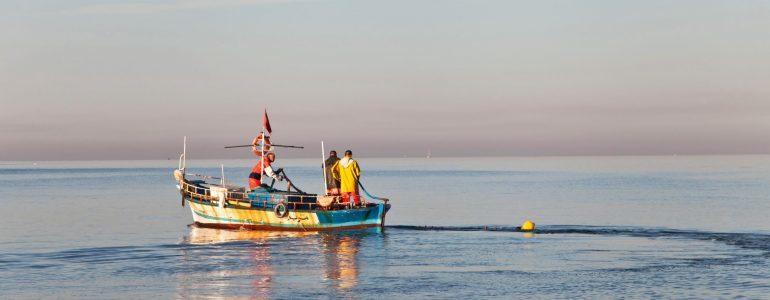
Ocean Nexus Center: To achieve equitable and sustainable oceans, policymakers must focus on social equity and governance before resources
A new paper from Nippon Foundation Ocean Nexus Center identifies areas of investments and research for five global regions to achieve a ‘Blue Economy'
Read more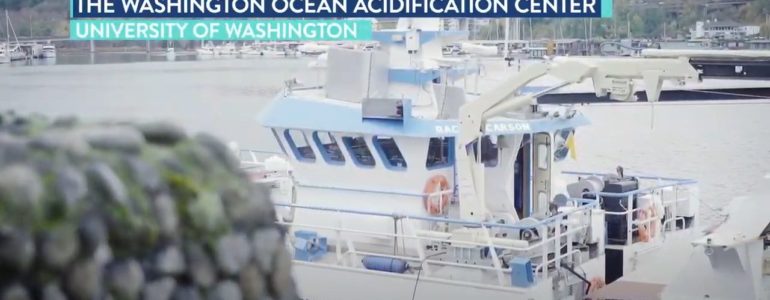
VIDEO: WOAC and partners profiled in AGU Thought Leadership Series
This year, the Washington Ocean Acidification Center was selected to be included in the AGU Thought Leadership Series, which profiles the work and research of urgent environmental issues. WOAC was selected due to the desire to spotlight centers that are "working against the clock" to alleviate ocean acidification.
Read more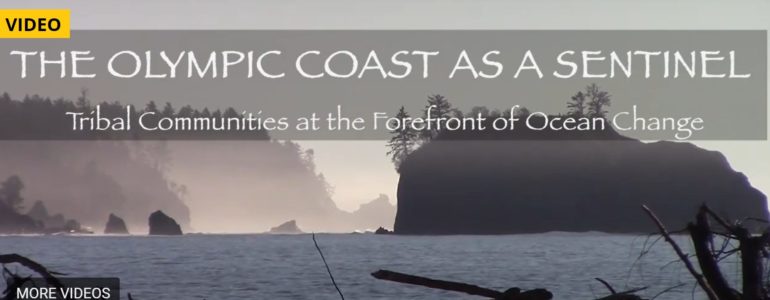
The Olympic Coast as a Sentinel – Tribal Communities at the Forefront of Ocean Change
This beautiful 18-minute film about the Olympic Coast research partnership uses collaborators’ own voices and perspectives on ocean change and tribal resilience to bring the story to life.
Read more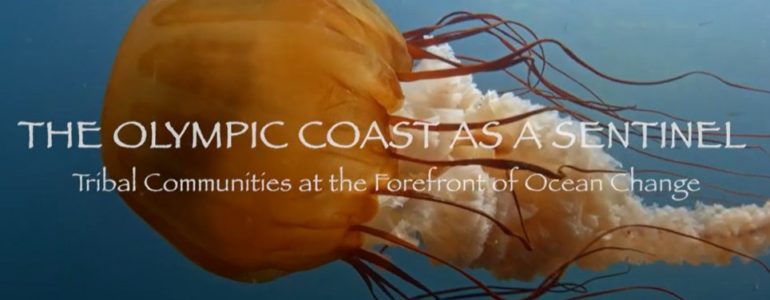
"The Olympic Coast as a Sentinel: Tribal Communities at the Forefront of Ocean Change" Premiers September 24 at the River & Ocean Film Festival
Trailer for “The Olympic Coast as a Sentinel: Tribal Communities at the Forefront of Ocean Change,” produced by Washington Sea Grant in partnership with Hoh Tribe, Makah Tribe, Quileute Tribe, Quinault Indian Nation, Northwest Indian Fisheries Commission, Olympic Coast National Marine Sanctuary, Olympic National Park, NOAA Pacific Marine Environmental Lab, UW Applied Physics Lab, UW Joint Institute for the Study of the Atmosphere and Ocean, and University of Connecticut.
Read more