Now available: Two new Spanish-Language report translations on climate impacts in Washington
Prolonged wildfire seasons, more extreme temperatures, and more frequent floods — these are just some of the symptoms of a greater global warming problem that Washingtonians are witnessing at a higher frequency. Although these climate changes impact everyone throughout our state’s economy and ecosystems, the extent that communities are personally impacted by such experiences highlight the ways that traditionally overlooked communities continue to be disproportionately affected in the aftermath.
In order to create sustainable change, it’s necessary to make impacts science more accessible and inclusive to all, especially those who have been historically marginalized from the adaptation field.
It’s for this reason that the UW Climate Impacts Group and several community partners are excited to share two Spanish-language reports on the impacts of climate change for Washington State. The reports — Sin Tiempo Que Perder (English report translation: No Time to Waste) and Cambiando las Líneas de Nieve y las Líneas de Costa (English report translation: Shifting Snowlines and Shorelines) — were originally published in English in 2018 and 2020, and are written for a general audience including policy makers, community organizers, journalists and the public.
The UW Climate Impacts Group and their partners hope that the Spanish translations of these reports will support efforts to engage with Spanish-speaking communities on the issues of climate change and climate impacts across our state.
This post has been adapted from the original blog on the Climate Impacts Group website. To learn more & read the original post, click here.
EarthLab Equity and Justice Reads: As Long as Grass Grows
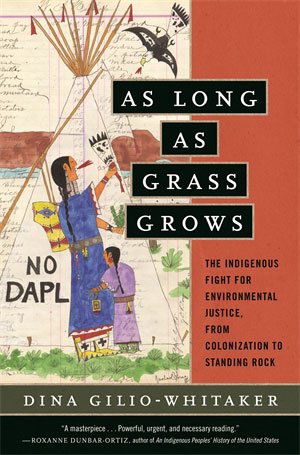
EarthLab has selected As Long As Grass Grows: The Indigenous Fight for Environmental Justice, from Colonization to Standing Rock by Dina Gilio-Whitaker for our equity and justice book club this quarter. EarthLab staff and member organization members will meet on Friday, March 5 to discuss approaches to activism and policy from past and current events of Indigenous environmental justice.
About As Long As Grass Grows
The publisher writes:
Through the unique lens of “Indigenized environmental justice,” Indigenous researcher and activist Dina Gilio-Whitaker explores the fraught history of treaty violations, struggles for food and water security, and protection of sacred sites, while highlighting the important leadership of Indigenous women in this centuries-long struggle. As Long As Grass Grows gives readers an accessible history of Indigenous resistance to government and corporate incursions on their lands and offers new approaches to environmental justice activism and policy.
Throughout 2016, the Standing Rock protest put a national spotlight on Indigenous activists, but it also underscored how little Americans know about the longtime historical tensions between Native peoples and the mainstream environmental movement. Ultimately, she argues, modern environmentalists must look to the history of Indigenous resistance for wisdom and inspiration in our common fight for a just and sustainable future.
Read more about the EarthLab Equity and Justice book club here.
Application Now Open for Future Rivers 2021/22
There is an urgent need for scientists from a range of disciplines to work together in innovative ways to solve problems. The Future Rivers Initiative, an organization in EarthLab, aims to build a culturally-aware STEM workforce fluent in state-of-the-art quantitative approaches that will be necessary for sustaining food-energy-water (FEW) services in large river ecosystems.
Applications can be submitted anytime; however, to be considered for funding, please submit by January 22, 2021.
EarthLab Feedback Survey (1 minute)
 We’re looking for your feedback! EarthLab is an innovative initiative at the University of Washington that has grown rapidly. We value your input as we continue developing our strategic plan that will shape our work for the next three-five years.
Estimated survey time: 1 minute
Future Rivers Graduate Trainee Program Information Session
Future Rivers is a National Science Foundation Research Traineeship graduate program that prepares students to be fluent in 21st century data science approaches and to understand interactions among and within food, water, and energy sectors in order to advance environmental sustainability.
Program Director Dr. Gordon Holtgrieve and Program Manager Athena Bertolino will present details on the Future Rivers program and answer questions. The team invites any interested students, faculty, or advisors to join them virtually. The online session will be recorded and distributed to registrants who are unable to attend live.
When: Tuesday, October 13, 2020 | 12:00 PM Pacific Time
The application for 2021/22 will open in November, with acceptance and funding decisions made in early 2021. Applications are open to both Masters and PhD – prospective or current – University of Washington students in any graduate degree program on campus.
Slipping Through the Cracks: Racism and the struggle for equity in the field of conservation
Thank you for joining us and listening to our panelists discuss their experiences as members of the BIPOC community and co-conspirators working in and around the field of conservation.
This event explored how racism and other issues of social injustice are connected to climate injustice and work against the goals of conservation.
Panelists:
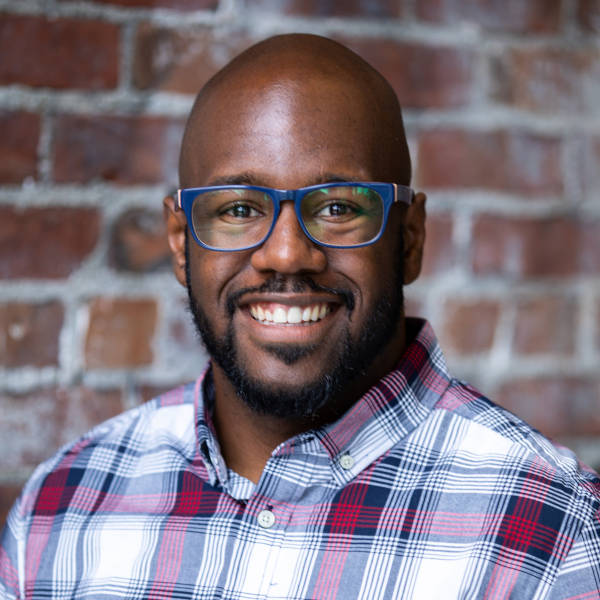
Chris Schell
Assistant Professor at University of Washington, Tacoma
Chris Schell is an urban ecologist whose research integrates evolutionary theory with ecological application to disentangle the processes accentuating human-carnivore conflict. Specifically, Chris’ interests lie in understanding the endocrine mechanisms that underpin carnivore behavior, as well as explicitly examining the anthropogenic drivers (i.e. human densities, roadways, pollution, interactions) that select for bold, habituated, and less fearful individuals in metropolitan areas.
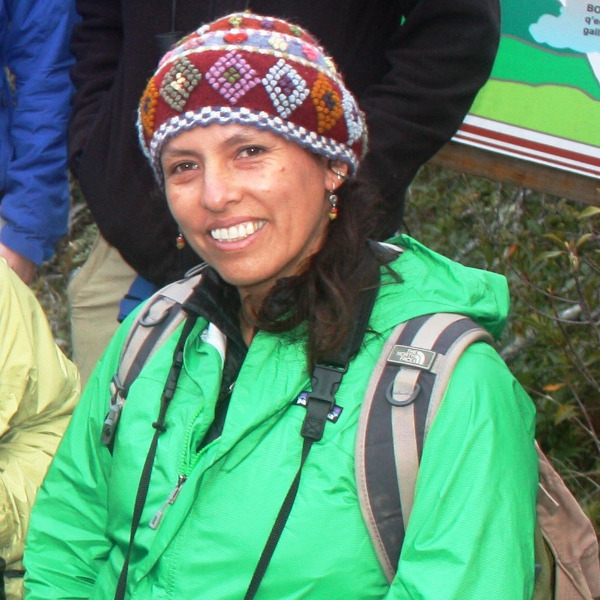
Ursula Valdez
Lecturer at University of Washington, Bothell
Ursula is a Lecturer at the University of Washington, Bothell. Her teaching is focused on the theory and application of topics in ecology (tropical and temperate systems), conservation, ornithology, natural history, human connections with the environment and field biology. In her courses, she provides opportunities for students to develop an understanding of the processes and mechanisms that explain the interactions of species with their environments and other species, including the critical role that humans have on them.
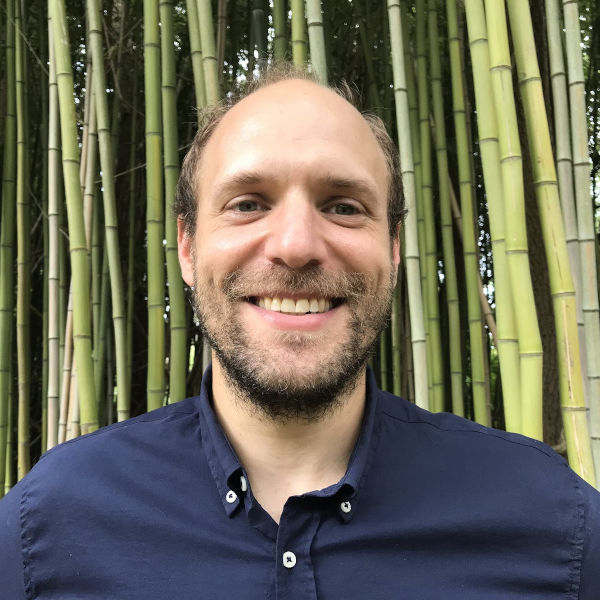
Aaron Soto-Karlin
Anthropologist & Filmmaker
Aaron is an anthropologist, filmmaker and innovation consultant who has documented the effects of deforestation on indigenous populations in Mexico, Guatemala, Panama and Brazil. He spent 10 years following the design and roll-out of California’s forest carbon cooperation program with Mexico and Brazil, where he alternated between roles as a researcher, union representative and storyteller. He’s proud to have supported the formation of an international movement to include local and indigenous communities in the management of protected areas and ownership of carbon credit programs. A Fulbright fellowship to examine pharmaceutical bioprospecting in Chiapas sparked his participation in the environmental justice movement.
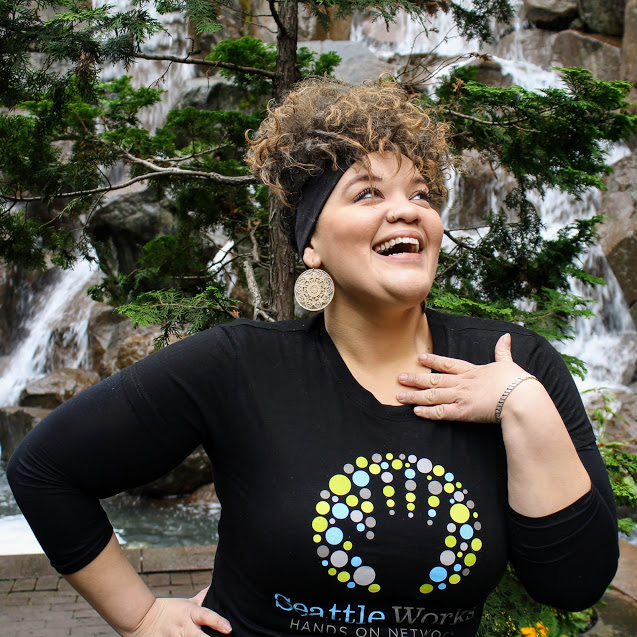
LaTashia Treise
Senior Program Manager at Seattle Works
LaTashia has over 10 years of experience working with non-profits and individuals of various ages, socio-economic status, and cultural backgrounds. LaTashia grew up in a rural town in Iowa where she obtained her Bachelor’s Degree from Buena Vista University in Psychology, Human Services, and a minor in sociology. After graduating, she worked at a local youth shelter working with families and teens teaching behavioral health skills. LaTashia also taught Zumba, performed in theater shows, and volunteered in the community including clean up, community events, and mentoring at-risk youth.
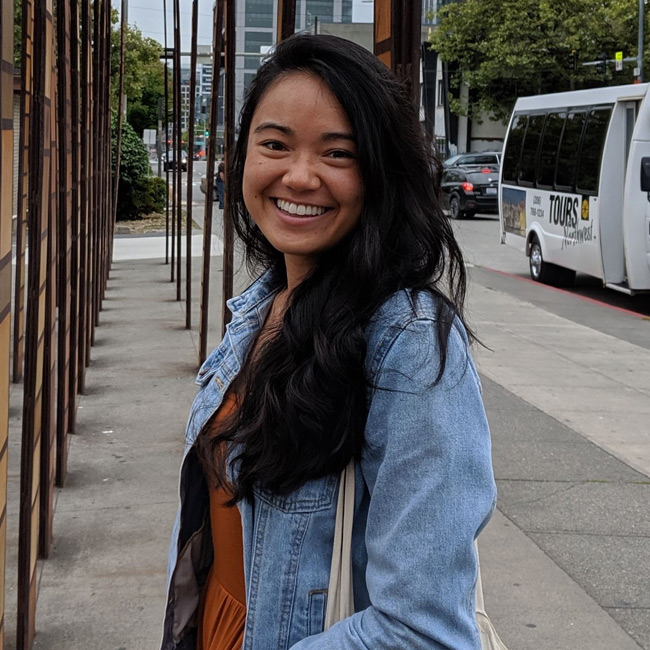
Cassie Whitebread
Program Manager at Seattle Works
Cassie is an east coast native with experience working in education and the non-profit sector. She’s channeled her inner Bill Nye (minus the bowtie) as a middle school science teacher in Philadelphia, PA, run a volunteer training program on community composting and taught outdoor environmental education to youth ages 6-15. Cassie holds a B.A. in Human Services with minors in Wildlife Conservation and Urban Education from the University of Delaware and a M.S. in Urban Education from the University of Pennsylvania.

Jasmmine Ramgotra
Founder of Culture Shift & Student at University of Washington
Jasmmine is a performer, choreographer, visual artist, student and social change agent who believes in making change through art. She is the founder of Culture Shift, a group that seeks to make art accessible to everyone and to expand our knowledge through new forms of expression. She is studying Environmental Studies at the University of Washington in order to focus on people, the economy and social justice in addition to environmental science.
Hosted by:


Salish Sea Equity & Justice Symposium Final Report Available
The 2019 Salish Sea Equity and Justice Symposium was created to amplify voices of historically underrepresented and marginalized groups within the environmental field in the Salish Sea and Pacific Northwest Coast region. During this two-day event, leaders from all types of environmental professional backgrounds convened to discuss how to integrate diversity, equity, and inclusion throughout their operations and environmental work.
Follow the links below to view the symposium final report and summary.
Join our team as a Research Scientist!
The Climate Impacts Group (CIG) is hiring an entry-level research scientist to provide social science/policy research support and logistical project management support to their team. They are seeking a candidate with a social science or policy background and project management experience who can add breadth to their work and support CIG’s senior researchers on climate change adaptation projects with their federal, tribal, state and local partners. Core job responsibilities will include:
- Research Support: This position will be responsible for thinking critically about, and doing research to support, the application of a social science or policy lens to projects led by the CIG’s senior research scientists. There may be opportunities to work independently on social science or policy projects; and
- Project Management: This position will be responsible for acting as project manager, or providing other logistical support, for a variety of projects led by the CIG’s senior research scientists.
The minimum qualifications are a bachelor’s degree in public policy, psychology, sociology, economics, or a related field with a minimum of 2 years of experience. While educational attainment is valued, we also encourage applications from practitioners who have worked in government, non-profits, and consulting who can bring a practical social science orientation to the team.