Funded Projects
Peeshkêesh Yáv Umúsaheesh: ‘The River Will Look Good’
Píkyav on the Mid-Klamath River
Our team addresses the challenge of convening Karuk-centric science and governance mechanisms to restore eco-cultural integrity to a crucial, yet degraded section of the mid-Klamath River. With an eye to the 2022 removal of four hydroelectric dams upstream, the Karuk Tribe considers this research both critical and timely. Klamath River communities face an urgent need to innovate governance so that it centers land-based communities’ livelihoods and understandings of environmental processes, politics, and histories.
Polar Science at a Human Scale
Knowledge Co-production for Hazard Planning, Food Sovereignty and Climate Adaptation in the Alaskan Arctic
This co-designed and co-managed project will bring together an interdisciplinary team of polar researchers from the University of Washington to work with Kivalina Volunteer Search and Rescue (KVL-SAR) and the City of Kivalina to support the organization’s goals and priorities while establishing a model of community-driven polar research for the coproduction of knowledge and action.
Pursuing Collaborative Adaptation in Coastal Washington
About this Project:
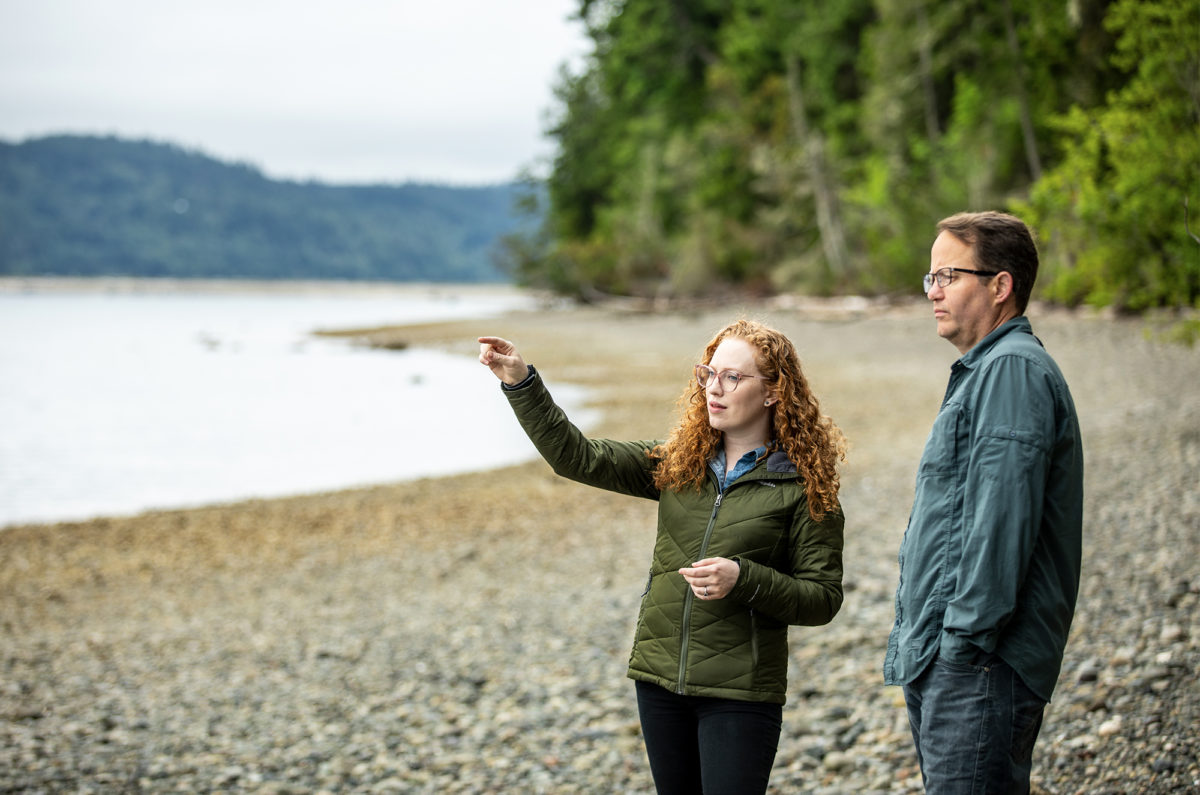
This project advances the research agenda and mission for the Center for Collaborative Adaptation, a forthcoming research center at UW in the process of being established by 4 early-career PIs from 3 departments in 2 colleges. The center will develop partnerships in rural coastal communities in Washington to pursue co-produced research that combines natural and social sciences with design and planning.
Reverse Redlining
Project update
May 2024
After the completion of the Innovation Grant, community partner Front and Centered, drafted and introduced the Cumulative Risk Burden (CURB) Pollution Act(House Bill 2070 and Senate Bill 5990) to the Washington State Legislature based on the findings of the Innovation Grant research. Front and Centered separately found sponsors, negotiated language that made it into the bill, and the bill took its own form and new shape using non-UW resources.
Rooted Knowledge: Land Stewardship, Storytelling, and Social Justice
About this project:
Rooted Knowledge: Land Stewardship, Storytelling, and Social Justice is a dynamic collective committed to the ethical study and circulation of Afro-indigenous knowledge and ecological practices. In the Sankofa tradition of Africana philosophy, Rooted Knowledge plants seeds for a sustainable future by looking backward and forward at once: stewarding the planet today by first remembering what our ancestors already knew.
Seattle Assessment of Public Health Preparedness and Response (SASPER): Duwamish Valley pilot project
Awarded Project Overview
April 2022
About the Project:
Climate change doesn’t affect everyone equally. Communities of color, low-income populations, and Indigenous peoples often bear the brunt of its impacts. In Seattle’s Duwamish Valley, home to the neighborhoods of South Park and Georgetown, residents are already experiencing more frequent and severe flooding. The area is also expected to be among the hardest hit by sea level rise in the city.
Supporting Tribal-Led Salmon Monitoring Using Computer Vision
Project Update:
November 2023
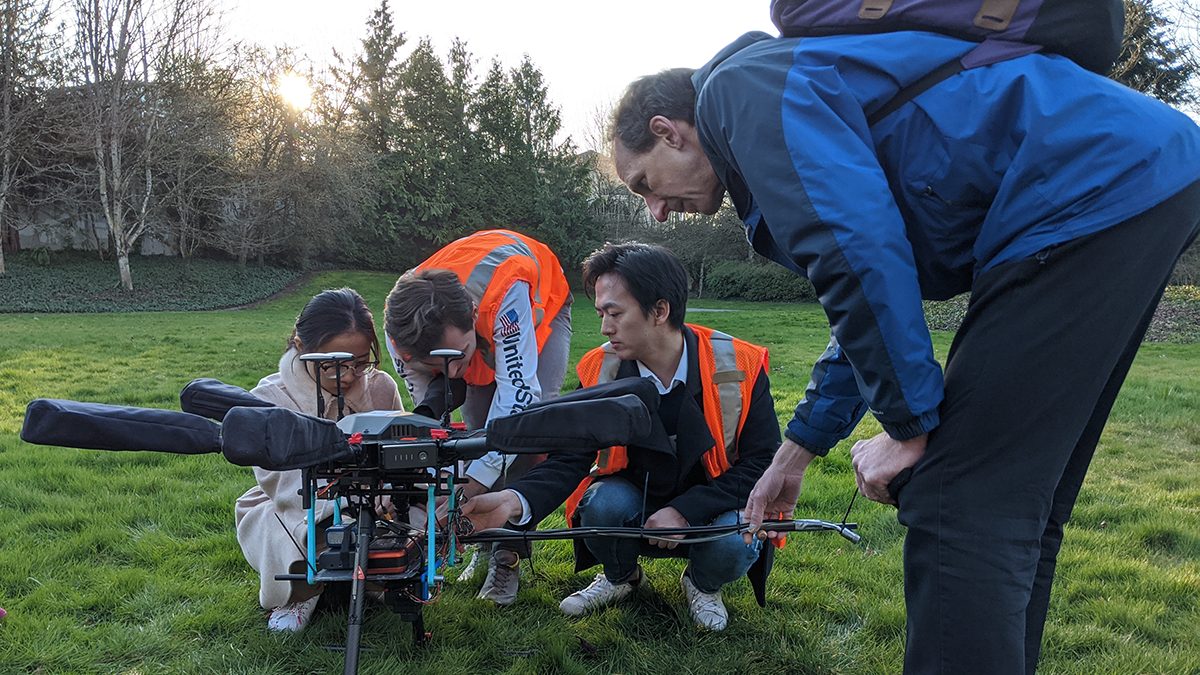
Efforts this past summer and fall have focused on laying the groundwork for future automated detection of redds, as well as developing data collection methods to be used for the final system. The team has conducted several drone-based surveys on the Skagit River to better understand the terrain and collect imagery to develop and train computer vision models to detect redds.
Symposium on Climate Change, Preparedness, and Health in Carceral Settings
About this project:
This symposium will convene scholars, clinicians, formerly incarcerated people, state agencies, community groups, and litigators to discuss climate risks in carceral settings and emerging legal, policy, and public health responses. In Washington, interest is growing in this area including research on hazard mitigation plans for prisons (UW/Dept of Corrections), emerging standards for indoor air quality (Dept of Health), and advocacy on conditions of confinement.
The Housing Spectrum, Temperature Extremes and the Costs of Thermal Safety and Comfort: A Community-Informed Policy Evaluation of Weatherization and Energy Assistance Programs
Awarded Project Overview
April 2022
About the Project:
This project brings together university researchers, community leaders, and policy experts to better understand how Seattle-area residents manage extreme temperatures. By combining academic research with lived experience, the project team will evaluate the effectiveness of weatherization and energy assistance programs. The goal is to identify what’s working, what’s not, and what new solutions can ensure people have safe and comfortable living conditions as climate change drives more frequent heatwaves and cold spells.
The Natural Start Alliance Research Network: Building Research Infrastructure for Early Childhood Climate Resilience and Environmental Justice
About this project:
Early childhood is a critical period for development, wellbeing, and shaping relationships with the environment, yet it remains largely absent from climate resilience and environmental justice research. This project launches the Natural Start Alliance Research Network to build research infrastructure, convene interdisciplinary scholars and practitioners, and develop a shared research agenda. By connecting researchers, practitioners, and community partners, the network strengthens collaboration and positions early learning as essential to climate resilience and environmental justice solutions.