EarthLab News

NextGen Narratives | Climate Challenges, Collective Solutions: The Story Behind Beating the Heat
By Caitlin Soler
Storytelling for Social Change Intern, Summer 2023
When we think of climate change in the Pacific Northwest, environmental impacts are increasingly at the forefront of our minds: raging wildfires, flooding, and breaking weather records. Two years ago, the Pacific Northwest Heat Dome broke heat records in cities across Washington, Oregon, Idaho, California, and Nevada. In many places, temperatures were 30 degrees above the seasonal average; Seattle alone measured 107°F.
Register Now for the Climate - Mental Health Nexus: How a Well-Being Approach Can Provide Lessons for Win-Win Policies
Join the University of Washington’s EarthLab, the Environment and Well-Being Lab and the OECD WISE Centre in a half-day public workshop on the intersection of climate change and mental health. The event will uncover the complex pathways linking climate change to worsening mental health outcomes, including new forms of distress. It will also showcase the restorative and protective aspects of nature, and the ways in which climate action can be leveraged to promote positive mental health outcomes.
Read more
The heat is on: How to protect health in extreme heat
To get ready for a hotter future, experts say Washington urgently needs to prepare now. A team of UW researchers, including leaders from the Center for Health and the Global Environment, and UW Medicine is leading collaborative research, creating new tools and building partnerships to help Washington and the Pacific Northwest get ready for what's coming.
Read more
Seattle Times Front Page Feature: UW report offers solutions to help prevent deaths during WA heat waves
Two years after the 2021 heat dome, Washington’s deadliest weather-related disaster, researchers are still trying to pin down its full impacts and what lessons can be learned. Officials estimate 126 people died from the heat between June 26 and July 2, 2021, when Washington set 128 all-time high temperature records, including in Seattle where people sweltered in up to 108 degrees. But a new report from the University of Washington says the heat dome was likely far deadlier, with 441 more people dying during that week than would have been expected based on previous years, after accounting for COVID-19.
Read more
Opinion: How we can better protect all residents during WA’s next heat wave
Drs. Jason Vogel and Jeremy Hess write about the recent report, “In the Hot Seat: Saving Lives from Extreme Heat in Washington State,” for the Seattle Times. “We clearly need to prepare for extreme heat going forward. If we do not take the lessons of 2021 to heart, the consequences will be predictable and devastating. We have been warned.”
Read more
New report, tool suggest how Washington can better protect against extreme heat
In June 2021, the “heat dome” that struck the Pacific Northwest sent temperatures in Seattle to an unprecedented 107 degrees Fahrenheit and set 128 all-time high temperature records across the state. The event was partly due to climate change. As the climate continues to warm, these hotter stretches are projected to hit the region with increasing frequency. Two years after that event — the deadliest weather-related disaster in state history — a collaborative effort led by two University of Washington teams, the Climate Impacts Group and the Center for Health and the Global Environment, or CHanGE, has drawn up recommendations for how people and groups across the state could prevent future heat-related illness and save lives.
Read more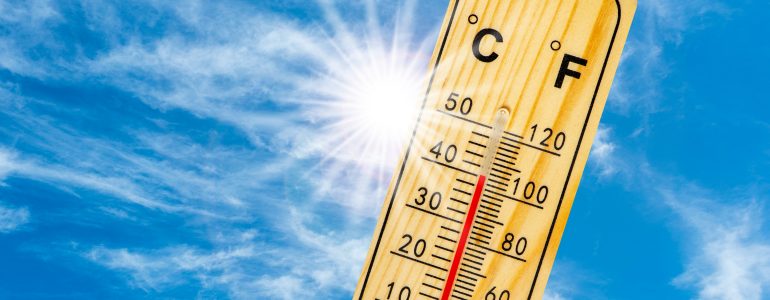
Introducing the CHaRT Tool: Navigating Climate-Related Health Risks
As climate changes continue to affect our lives, it is crucial for decision makers and community members to have the information they need to better understand and then address climate-related hazards. Certain communities bear a disproportionate burden from these hazards, which makes it essential to thoroughly understand the different mechanisms, scales, and geographic distributions of climate impacts on community health.
To address this, the Center for Health and the Global Environment has officially launched the Climate Health and Risk Tool (CHaRT), a groundbreaking interactive platform that helps users explore the intricate relationship between climatic, environmental, social, and economic factors contributing to hazards faced by communities.
Climate Impacts Group & partners release report in English and Spanish aimed at preventing heat-related illness and death in Washington
A new report from experts at the University of Washington, Washington State Department of Health and Gonzaga University describes the problem of extreme heat and outlines specific, actionable guidance for short-term emergency response and long-term risk reduction. In the hot seat: Saving lives from extreme heat in Washington state highlights roles for state and local governments, elected officials, community- and faith-based organizations and others in addressing this important issue.
Read more
Join us June 22 for "Beating the Heat: Collective Action for a Safer Northwest"
Join EarthLab, The Climate Impacts Group and the Center for Health and the Global Environment on June 22 for a panel discussion, report launch & climate resiliency tool demo to help save lives during extreme heat.
Read more